
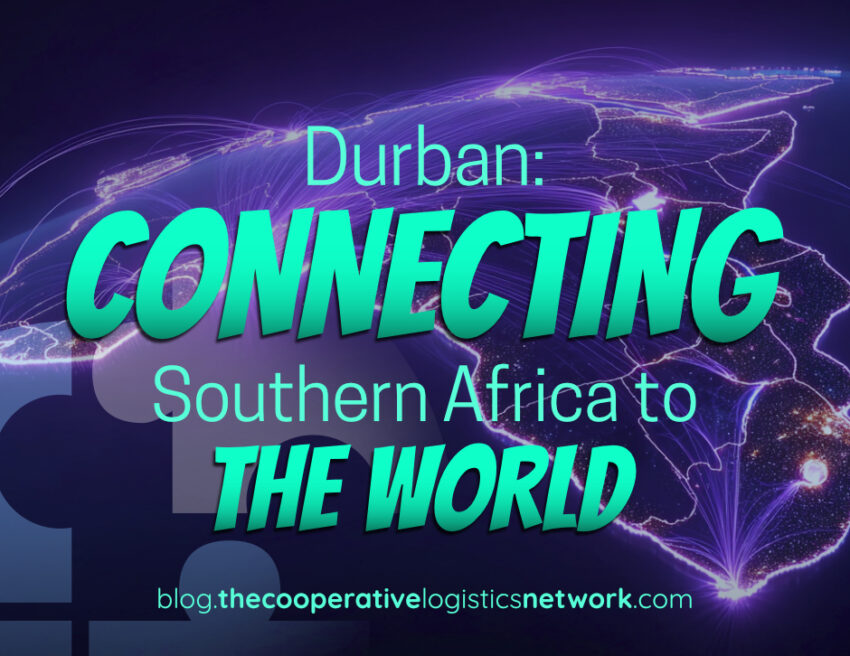
Durban has long been an important maritime gateway for South Africa, connecting international shipping routes with the country’s industrial heartland and neighbouring markets. Its strategic location along the Indian Ocean, established port infrastructure, and road and rail connections make Durban Logistics an important part of regional and international supply chains. For freight forwarders, the city offers opportunities to handle diverse cargo flows, support cross-border trade, and develop partnerships across Southern Africa.
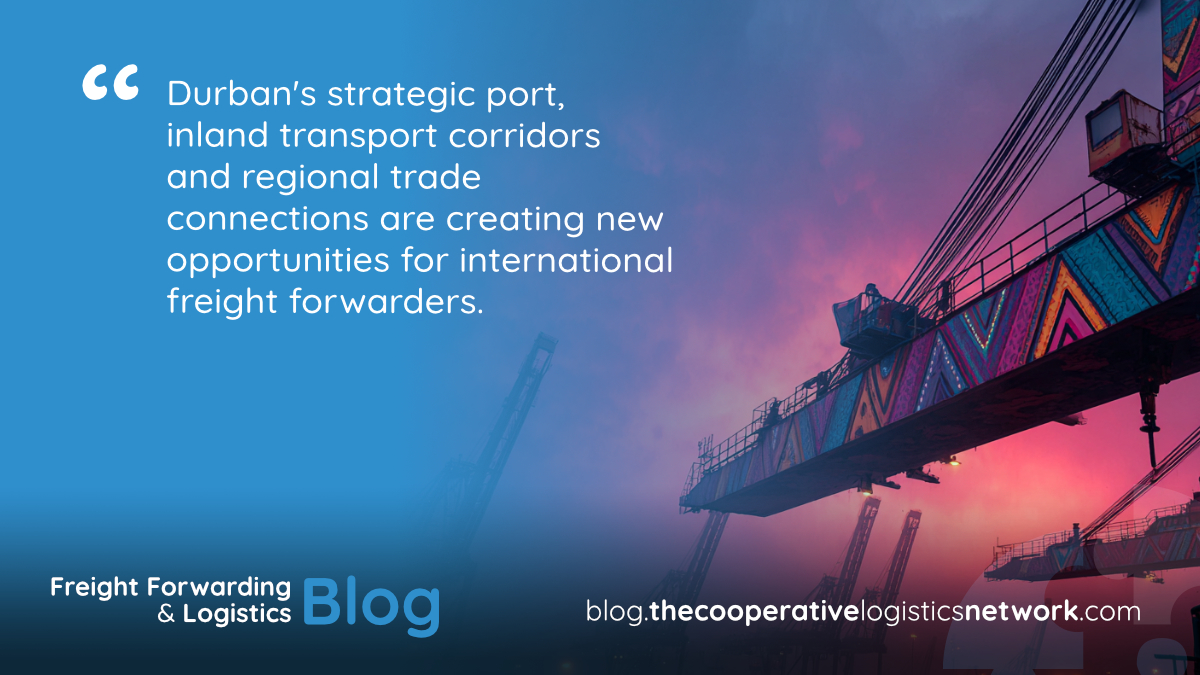
The Port of Durban is South Africa’s busiest container port and a major entry point for cargo destined for the Gauteng region and the wider Southern African Development Community (SADC). Beyond its maritime importance, Durban’s position in KwaZulu-Natal connects it to manufacturing centres, agricultural production areas, distribution hubs, and inland transport corridors. Understanding these connections can help international freight forwarders identify new business opportunities and provide more comprehensive services to customers trading with the region.
1. The Port of Durban: A Strategic Gateway for International Trade
The Port of Durban is central to South Africa’s international trade, handling a broad range of containerised, bulk, breakbulk, and specialised cargo. Its facilities support imports of manufactured goods, machinery, consumer products, chemicals, and other commodities, alongside exports of agricultural products, minerals, automotive goods, and industrial materials. The port provides access to several cargo segments and opportunities to develop specialised services. Importers rely on efficient cargo handling, customs clearance, and inland distribution, while exporters need dependable coordination between warehouses, transport providers, shipping lines, and overseas agents.
The port is also undergoing important infrastructure and operational developments. In January 2026, International Container Terminal Services Inc. (ICTSI) took over operations at Pier 2 under a long-term concession arrangement. Additional developments at the Maydon Wharf precinct and wider investments in port infrastructure are intended to improve capacity and strengthen Durban’s position as a gateway for agricultural and perishable exports. These developments could create new opportunities for logistics providers as terminal operations, cargo handling capabilities, and landside connections evolve. However, forwarders must continue monitoring operational changes and planning around potential congestion, vessel delays, and cargo-handling constraints.
2. Connections with South Africa’s Industrial and Commercial Centres
One of Durban’s biggest advantages is its connection to Gauteng, South Africa’s principal economic and industrial region. The Durban–Johannesburg corridor is particularly important for moving imported goods from the coast to inland distribution centres and transporting export cargo towards the port. Johannesburg and the surrounding Gauteng region host major manufacturing, wholesale, retail, mining, and distribution activities. Consequently, freight forwarders handling cargo through Durban often need to coordinate additional road or rail transportation to reach customers and warehouses further inland.
The corridor also creates opportunities for companies offering integrated freight solutions. Rather than arranging port-to-port transportation alone, forwarders can provide door-to-door services incorporating customs clearance, container haulage, warehousing, cargo consolidation, and final delivery. For international agents, understanding this inland connection is essential when preparing quotations for shipments to South Africa. Port charges represent only part of the overall transportation cost, and inland haulage, transit times, equipment availability, and delivery requirements must also be considered.
3. Durban’s Role in Southern African Regional Trade
Durban’s importance extends beyond South Africa’s borders. Its port and inland transport connections make it relevant to regional supply chains serving countries such as Zimbabwe, Zambia, Botswana, Eswatini, Lesotho, and Mozambique. Cargo entering South Africa through Durban may be destined for businesses and distributors in neighbouring landlocked countries. This creates demand for cross-border road transportation, customs coordination, transit documentation, and reliable destination handling.
Freight forwarders can explore opportunities in several areas:
- Cross-border road freight: Coordinating cargo movements between Durban and inland destinations across Southern Africa.
- Customs and transit arrangements: Working with local specialists to manage documentation and border formalities.
- Import and export consolidation: Combining smaller consignments to improve cargo utilisation and transportation efficiency.
- Warehousing and distribution: Supporting importers that require temporary storage or regional distribution facilities.
- Multimodal transportation: Combining sea, road, and rail services where infrastructure and shipment requirements make this commercially viable.
For companies involved in international trade, Durban provides an opportunity to connect ocean freight services with inland and cross-border transportation networks. Forwarders with reliable regional partners can therefore offer customers broader coverage without needing to establish their own operations in every destination market.
4. Key Logistics Challenges Freight Forwarders Should Consider
Despite its strategic advantages, moving cargo through Durban requires careful operational planning. Port congestion, equipment availability, road infrastructure constraints, and delays in cargo collection can affect shipment schedules and increase transportation costs. Freight forwarders should consider several factors when coordinating shipments through the city:
Port congestion and vessel delays: Changes in vessel schedules and terminal operations can affect cargo availability. Regular communication with shipping lines and local handling agents is essential to keep customers informed.
Demurrage and detention: Delays in clearing or collecting containers can result in additional charges. Forwarders should monitor free-time limits, coordinate documentation in advance, and arrange transport before cargo becomes available.
Inland transportation constraints: Road congestion and infrastructure limitations along major freight corridors can affect delivery schedules. Transport arrangements should account for realistic transit times and possible disruptions.
Customs documentation: Incorrect or incomplete paperwork can delay clearance and cargo release. Importers and their agents should verify documentation requirements before shipments arrive.
Cross-border coordination: Shipments destined for neighbouring countries may require additional transit procedures, border documentation, and coordination between multiple service providers. Clear communication between origin, destination, and transit agents is therefore essential.
By identifying these challenges early, freight forwarders can develop more reliable routing plans, provide accurate quotations, and reduce unexpected costs for their customers.
5. Opportunities in Specialised Cargo and Emerging Trade Segments
Durban’s diverse cargo profile also creates opportunities for freight forwarders with specialised handling capabilities. Agricultural and perishable exports are particularly relevant to the port’s development plans. These shipments require careful temperature management, suitable reefer equipment, timely customs procedures, and close coordination with shipping lines to protect cargo quality throughout transit.
The automotive sector is another important area. South Africa has an established vehicle manufacturing and export industry, while Durban serves as a significant gateway for automotive cargo. Freight forwarders can support vehicle imports and exports, automotive components, spare parts, and related project logistics requirements.
Other opportunities include:
- Project cargo: Coordinating heavy-lift and out-of-gauge shipments for industrial, energy, and infrastructure projects.
- Mining and industrial equipment: Arranging transportation of machinery, components, and specialised equipment for inland operations.
- Breakbulk cargo: Handling goods that cannot be transported economically in standard containers.
- Temperature-controlled logistics: Managing pharmaceuticals, food products, and other temperature-sensitive consignments.
Developing expertise in these segments can help freight forwarders differentiate their services and build relationships with customers requiring more than conventional container transportation.
6. How The Cooperative Logistics Network Can Help Freight Forwarders in Durban
For independent freight forwarders operating in Durban, international partnerships can be an important source of business growth. Being part of The Cooperative Logistics Network provides access to a worldwide community of over 362 carefully selected freight forwarding companies that cooperate to exchange shipments, develop trade-lane opportunities, and serve customers across international markets.
Through the network, Durban-based members can connect with overseas agents looking for reliable South African partners to handle imports, exports, customs clearance, and inland transportation. In return, they can collaborate with other members to offer their customers services in destinations where they do not have their own offices.
The Cooperative also provides members with access to FreightViewer, its online quoting platform, an international agent directory, marketing and promotional support, and a Payment Protection Plan for participating members. Its Annual Meetings provide further opportunities to meet international partners, discuss business prospects, and establish lasting professional relationships. For companies looking to expand beyond their domestic customer base, these connections can help generate new enquiries, strengthen international service capabilities, and create opportunities to compete for larger logistics contracts.
Conclusion
Durban’s strategic location, established maritime infrastructure, and connections with South Africa’s industrial centres and neighbouring countries make it an important gateway for regional and international trade. While port congestion, inland transport constraints, and cross-border procedures present operational challenges, they also create opportunities for freight forwarders capable of offering well-coordinated and reliable logistics solutions.
As Durban Logistics continues to evolve through infrastructure investment and changing regional trade requirements, international cooperation will remain important for companies seeking to expand their reach. By developing specialised capabilities, building dependable overseas partnerships, and understanding the needs of regional markets, freight forwarders can make the most of Durban’s position within Southern Africa’s supply chain landscape.