


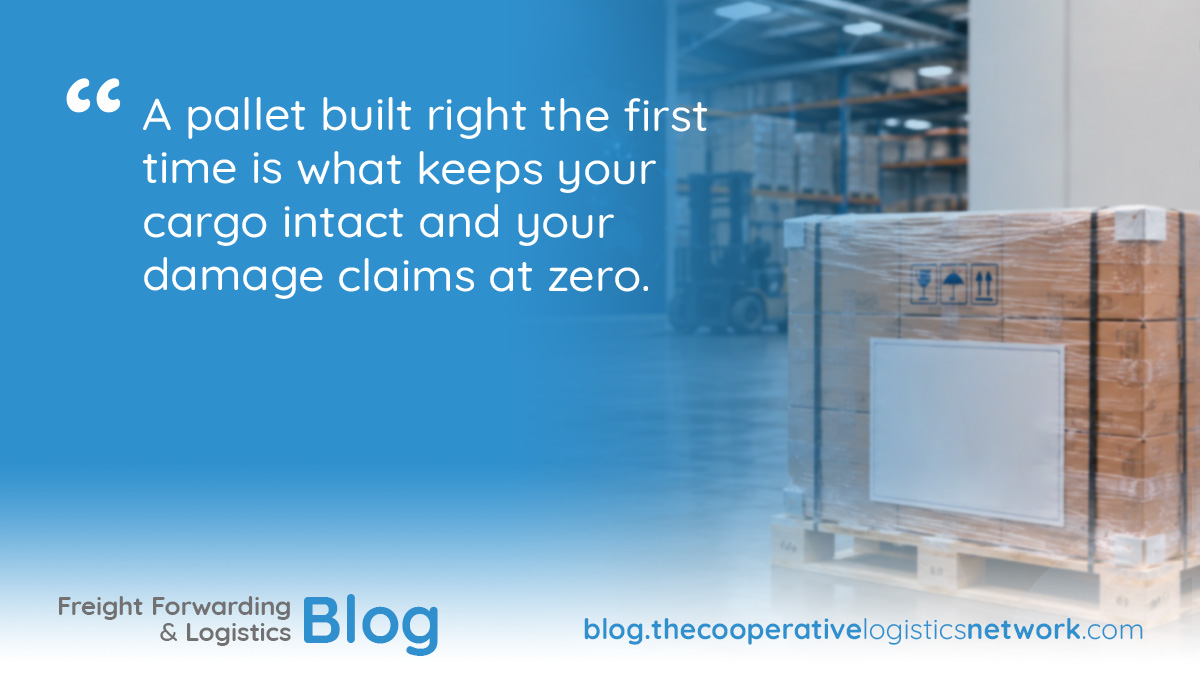
Most freight damage claims do not start on the loading dock, with a pallet that was never built to survive the trip. The good news is that this is one of the most controllable parts of shipping. A well-built pallet dramatically reduces the odds of a damage claim, regardless of how many times it gets transferred between trucks along the way. Here is a practical guide to packing and palletizing cargo correctly.
Choosing the Right Pallet
The pallet itself is the foundation of the entire load, and a bad one undermines everything stacked on top of it. Before loading anything, check the pallet for cracked, splintered, or missing boards, protruding nails, and visible rot or water damage. A pallet that looks structurally sound but is rated for less weight than your load will flex or fail in transit, even if nothing looks wrong at the time of loading.
Match the pallet size to the footprint of your goods. Cargo that overhangs the edges of a pallet is far more likely to get crushed or torn at transfer points, since forklifts, dock plates, and other freight often make contact with whatever extends past the pallet’s edge. If your load naturally exceeds a standard pallet size, it is worth using a larger or custom pallet rather than letting product hang off the sides.
Building the Load: Weight Distribution and Stacking
Once you have the right pallet, how you build the load matters as much as the pallet itself. A few core principles apply to nearly every type of cargo:
- Heaviest items go on the bottom. Stacking heavy boxes on top of lighter ones creates an unstable load that can crush what is underneath or topple during transit.
- Distribute weight evenly across the pallet footprint. A load that is heavier on one side is more likely to shift or tip, especially during the sudden stops and turns that are a normal part of over-the-road transport.
- Keep the load within the pallet’s edges. As with pallet selection, nothing in the load itself should overhang the sides. Overhanging boxes get caught, crushed, or torn off entirely when pallets are moved close together in a trailer or warehouse.
- Interlock boxes where possible, similar to bricklaying, rather than stacking every layer in identical vertical columns. This creates a more stable structure that resists shifting.
- Keep the load height reasonable. An overly tall, narrow load has a higher center of gravity and is more prone to tipping. If your cargo requires height, make sure the base is wide and well-secured enough to support it.
Securing the Load
A well-built stack still needs to be secured, or all that careful stacking work can undo itself the moment the truck hits a hard brake. Stretch wrap is the most common method for securing palletized freight, and it is also one of the most commonly done incorrectly.
Wrap from the bottom of the load to the top and back down again, overlapping each pass so there are no gaps where boxes can shift free. A load wrapped too loosely, or wrapped only partway up, offers little real protection. For heavier or bulkier loads, banding adds additional security, particularly around the vertical corners where wrap alone may not hold.
Corner boards, placed vertically at each edge of the pallet before wrapping, protect the load’s corners from the tension of the wrap itself and add resistance against impacts during handling. They are inexpensive and one of the easiest upgrades to add to a standard pallet build.
A common mistake worth calling out directly: wrapping only the upper boxes and leaving the base layer unwrapped or loosely secured. The base is what keeps the entire pallet stable, and it deserves the same attention as the top.
Labeling for Handling
Clear labeling reduces the odds of mishandling at every transfer point between origin and destination. Fragile cargo should be labeled clearly on multiple sides, not just the top, since pallets are frequently viewed from the side during loading and unloading. “This side up” labeling matters just as much, particularly for mixed pallets where inverting part of the load could cause crushing or spills.
If a pallet contains mixed products with different fragility levels, label each layer or section clearly so warehouse staff and drivers handling the freight understand what they are working with, rather than treating the entire pallet as uniform.
A Real Example
Consider a shipment of glass fixtures packed on a pallet that was slightly too small for the load, with boxes overhanging the edges by a few inches on two sides. The pallet was wrapped, but only from the middle of the stack upward, leaving the base layer loosely secured. During a standard transfer between trucks, a forklift made contact with the overhanging boxes, and the loosely wrapped base allowed the load to shift under the impact. The result was a damage claim covering several thousand dollars in broken product, all traceable back to a pallet that was the wrong size and a wrap job that skipped the base. A correctly sized pallet and a full top-to-bottom wrap would have prevented the damage entirely, at essentially no additional cost.
What to Do If Damage Happens Anyway
Even a well-packed pallet can occasionally arrive damaged due to factors outside your control. If that happens, document it immediately. Photograph the damage before unpacking or moving the pallet further, and note the damage clearly on the delivery receipt before signing for the shipment. A claim backed by clear documentation and evidence of proper packing is far more likely to be honored than one without it.
The Cost of Getting It Right
Building a pallet correctly takes a few extra minutes and a small amount of additional material. A damage claim costs far more than that, not just in the value of the damaged goods but in the time spent filing the claim, the disruption to your customer, and the strain it puts on a carrier relationship. Treating pallet building as a step worth doing carefully, every time, is one of the simplest ways to keep freight moving without costly surprises at the other end.