

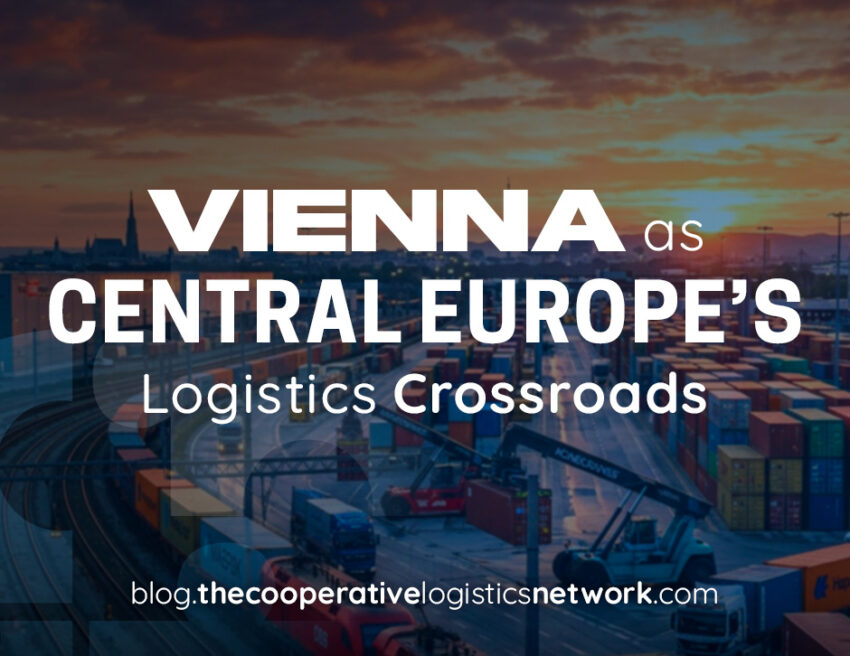
Vienna has quietly become one of the most strategically valuable cities on the European logistics map, and forwarders who overlook the Vienna logistics crossroads are missing a rapidly growing opportunity. Positioned at the intersection of Western Europe, the Balkans, and the expanding markets of Eastern EU member states, Vienna offers a combination of geography and infrastructure that few other Central European cities can match.
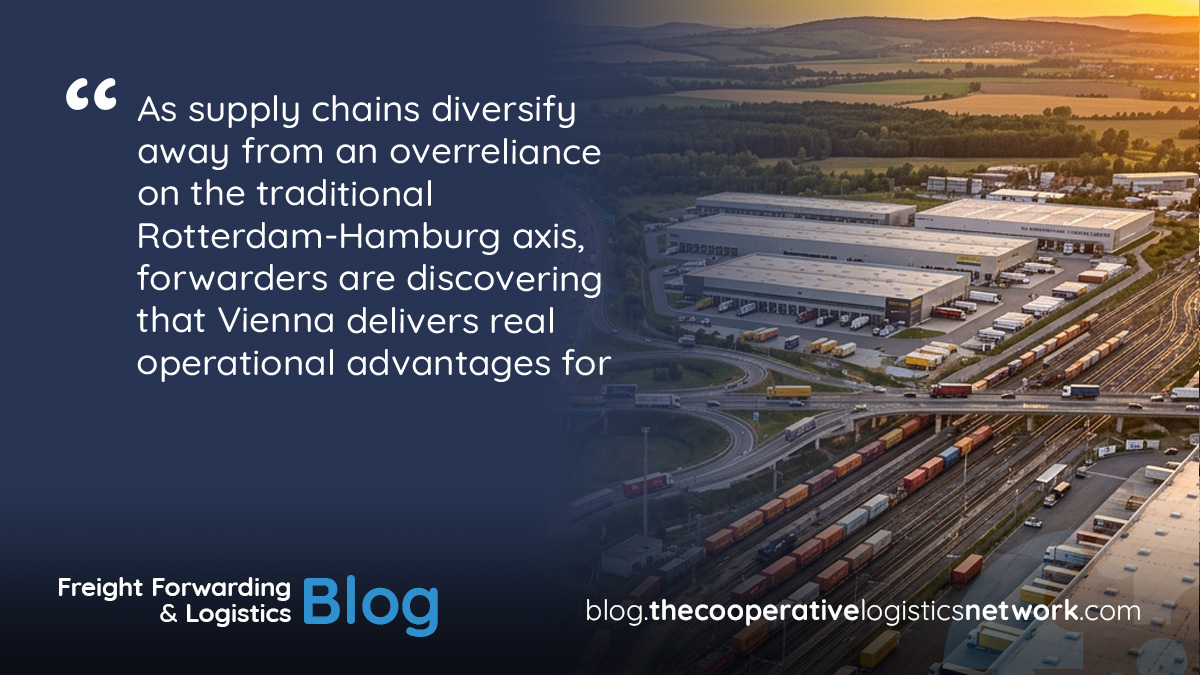
For decades, Vienna’s role in trade was largely historical, a city known for its cultural weight rather than its cargo throughput. That has changed. As supply chains diversify away from an overreliance on the traditional Rotterdam-Hamburg axis, forwarders are discovering that Vienna delivers real operational advantages for clients moving goods across Central and Southeastern Europe.
Why Vienna Sits at the Center of Central European Trade
Vienna’s geographic position places it within reach of Munich, Budapest, Bratislava, and the Balkan capitals, all within a few hours by road or rail. This proximity gives the city a natural advantage for distribution networks that need to serve multiple markets from a single base.
Austria’s economic history reinforces this positioning. The country has long served as a bridge between Western European industry and Eastern European and Balkan markets, a role that predates the EU itself. What was once a matter of diplomatic and cultural exchange has become a matter of freight routing, as manufacturers and distributors look for a base that connects them efficiently in every direction rather than pushing them toward a single corridor.
Vienna Logistics Crossroads: The Multimodal Advantage
This is where the case for Vienna becomes concrete. The Vienna logistics crossroads advantage rests on the convergence of rail, road, river, and air connectivity within a compact metropolitan area, something few Central European cities can offer at the same scale.
A machinery exporter based near Vienna found that the city’s rail links allowed the company to serve both German industrial clients and Balkan distribution partners from the same facility, cutting the need for separate regional warehousing that had previously added cost and complexity to the supply chain. The company consolidated what had been two distribution points into one, using Vienna’s rail network to reach both markets without sacrificing delivery speed.
A pharmaceutical distributor operating across Central Europe found similar value in Vienna’s air cargo capacity. Time-sensitive shipments requiring strict temperature control moved faster and with greater reliability through Vienna’s airport than through more distant hubs, allowing the distributor to serve clients in Austria, Slovakia, and Hungary from a single origin point. The Danube also plays a supporting role for bulk cargo, giving forwarders another modal option when road or rail capacity tightens.
The Competitive Edge for Forwarders Who Move Early
Forwarders who build expertise in the Vienna logistics crossroads now are positioning themselves ahead of a wave of demand that is only beginning to build. Many freight forwarders continue to route Central and Southeastern European cargo through Rotterdam or Hamburg out of habit, adding unnecessary transit time and cost for shipments that could move more efficiently through a Vienna-based network.
This creates a real opening. As Balkan economies grow and Eastern EU markets continue expanding their manufacturing base, demand for a Central European distribution point with genuine multimodal flexibility will only increase. Forwarders who establish strong local partnerships in Vienna today will have the operational credibility to win that business before larger, slower-moving competitors catch up.
Key Trade Connections Forwarders Should Know
Vienna’s strongest trade connections run toward Budapest, Bratislava, and the Balkan capitals, each reachable within a single day by road. These routes make Vienna a natural staging point for forwarders managing multi-country distribution across the region.
Border crossings into non-EU Balkan markets carry their own customs considerations. Forwarders working these lanes need clear visibility into documentation requirements and processing times at these crossings, since delays here can undercut the speed advantage that makes Vienna attractive in the first place. Building relationships with partners who understand these border dynamics gives forwarders a meaningful edge over competitors relying on generic routing.
Why Global Partnerships Matter for Central European Logistics
As supply chains become more interconnected across Europe, freight forwarders operating in Vienna are ideally positioned to connect Western Europe with the rapidly growing markets of Central, Eastern, and Southeastern Europe. However, managing international shipments across multiple borders requires more than local market knowledge. It depends on trusted overseas partners who can ensure seamless cargo movement from origin to destination.
This is where a network like The Cooperative Logistics Network creates measurable value. The network connects members with carefully vetted partners across major logistics gateways, giving forwarders the tools to strengthen origin and destination coordination, sharpen communication throughout the shipment lifecycle, and deliver consistent service across an increasingly complex European trade landscape. As Vienna continues to grow in importance, access to experienced local partners becomes a competitive necessity rather than a convenience.
A Trusted Global Network
The Cooperative brings together carefully selected independent freight forwarders across more than 135 countries, giving members access to a dependable network of logistics specialists in key international markets. Instead of relying on unfamiliar agents, members work with trusted partners committed to long-term relationships, operational excellence, and consistent service standards.
Stronger Coordination Across European Supply Chains
Cargo moving through Vienna often involves a combination of road, rail, air, and inland distribution before reaching its final destination. Whether serving manufacturers in Central Europe or distributing goods across the Balkans and Eastern Europe, efficient coordination between origin and destination partners is essential. Working within a trusted network improves communication, minimizes operational delays, and enables freight forwarders to deliver a consistently reliable service.
Supporting Diverse Industries and Trade Lanes
Vienna serves a broad range of industries, including automotive, machinery, pharmaceuticals, electronics, consumer goods, and high-value manufacturing. These sectors demand logistics providers capable of handling multimodal transport, time-sensitive cargo, and complex cross-border movements. Access to experienced overseas partners enables members to confidently manage specialized shipments while maintaining visibility and control throughout the supply chain.
Building Relationships That Drive Growth
The Cooperative’s Annual Meetings strengthen these partnerships through structured one-to-one meetings and face-to-face networking opportunities. In an industry where trust, responsiveness, and local expertise are critical, these personal connections create lasting business relationships and generate new opportunities for collaboration across international markets.
As Vienna continues to strengthen its role as one of Europe’s leading logistics crossroads, membership in The Cooperative Logistics Network equips freight forwarders with the global partnerships, local expertise, and collaborative support needed to deliver efficient supply chain solutions and compete successfully in an increasingly integrated European market.
Looking Beyond Traditional European Gateways
While Europe’s major seaports remain essential to global trade, an increasing share of cargo is being routed through inland logistics hubs that offer greater flexibility and access to regional markets. Vienna has emerged as one of these strategic gateways, connecting Western Europe with the fast-growing economies of Central, Eastern, and Southeastern Europe through an extensive multimodal transport network.
For freight forwarders, understanding Vienna’s evolving role provides a valuable competitive advantage. By combining strong local expertise with reliable international partnerships, they can offer customers more efficient routing options, greater supply chain resilience, and seamless cross-border logistics solutions. As European trade continues to evolve, Vienna is proving that the continent’s most important logistics hubs are defined not only by infrastructure but by their ability to connect markets, industries, and global supply chains.
Conclusion
Vienna’s rise as a Central European logistics crossroads reflects a broader shift in how trade moves across the continent. As forwarders look beyond the traditional coastal corridors and recognize the value of a hub connecting Western Europe, the Balkans, and Eastern EU markets, Vienna stands out as a city built for this moment. Forwarders who invest in Vienna expertise now, backed by strong local partnerships and multimodal know-how, will be the ones positioned to capture this business as regional trade continues to expand.