

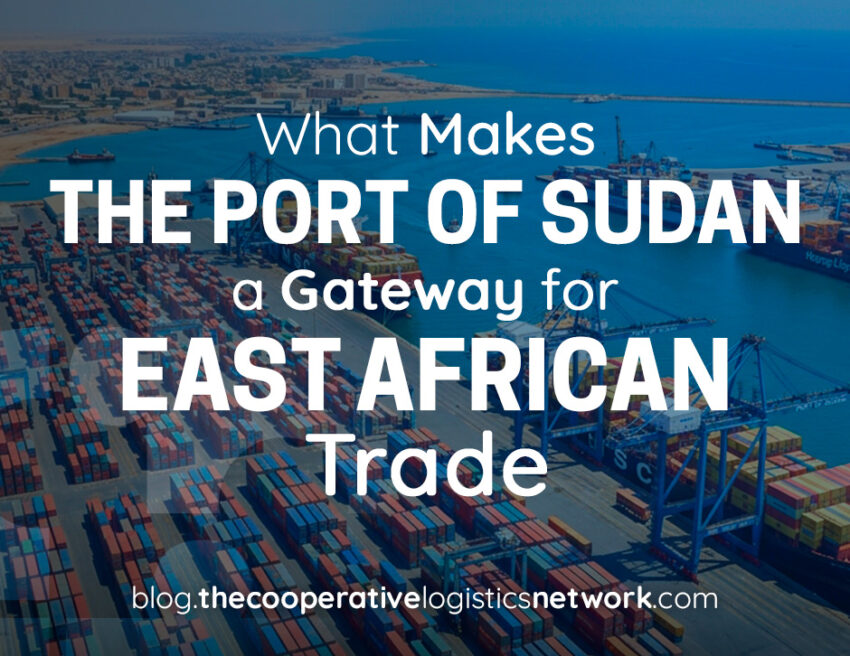
The logistics landscape in Northeast Africa has undergone major changes over the last few years, yet one thing remains clear: Port Sudan continues to hold enormous strategic importance for regional and international commerce. For companies involved in freight forwarding in Sudan, the port remains a critical link connecting African markets with the Middle East, Asia, and Europe. Its location along the Red Sea gives it lasting geopolitical and commercial value, while its role as Sudan’s principal maritime gateway ensures that it remains central to trade flows across the region.
Despite operational challenges and changing market conditions, Port Sudan continues to handle a substantial share of the country’s imports and exports. From containerized cargo and project shipments to humanitarian aid and bulk commodities, the port serves as an essential logistics hub for Sudan and neighboring landlocked countries. As supply chains become increasingly dependent on regional diversification and reliable local partnerships, the importance of strong freight operations in and around Port Sudan has become even more evident. For freight forwarders looking at opportunities in East Africa and the Red Sea corridor, understanding the strategic relevance of Port Sudan is no longer optional. It is becoming increasingly necessary.
A Strategic Position Along the Red Sea
Geography has always played a major role in determining the importance of global trade hubs, and Port Sudan benefits from one of the most valuable maritime locations in Africa. Positioned on the western shore of the Red Sea, the port lies close to one of the busiest shipping routes in the world. Vessels traveling between Europe and Asia through the Suez Canal frequently pass through these waters, placing Port Sudan near a major artery of international trade.
This location gives Sudan direct maritime access to global markets while also supporting inland trade connections with neighboring countries. Cargo arriving at Port Sudan can move toward key commercial centers across Sudan and beyond, including routes that support trade with Chad, South Sudan, Ethiopia, and the Central African region.
The strategic value of the port becomes even more apparent when regional supply chain diversification is considered. Over the past few years, logistics companies worldwide have increasingly focused on building more flexible transport networks capable of adapting to disruptions. This shift has encouraged freight forwarders and shippers to explore alternative gateways and regional logistics hubs. In this context, Port Sudan remains an important operational center with long-term potential.
The Importance of Freight Forwarding in Sudan for Regional Trade
The role of freight forwarding in Sudan extends far beyond simply moving cargo from one point to another. Freight forwarders operating in the region often function as problem-solvers, coordinators, customs experts, and vital communication bridges between international clients and local markets.
In many emerging logistics environments, supply chains require a much higher level of adaptability than in more predictable markets. Shipment planning frequently involves dealing with infrastructure limitations, customs procedures, route changes, storage considerations, and operational uncertainty. This is where experienced freight forwarders become essential.
Port Sudan plays a particularly important role in facilitating the movement of critical goods into the country. Consumer products, industrial equipment, food items, construction materials, and medical supplies all pass through the port. Humanitarian cargo has also become increasingly significant in recent years, further highlighting the importance of reliable freight coordination.
What makes freight forwarding in Sudan especially valuable is the ability of local logistics professionals to navigate rapidly changing operational conditions while maintaining communication with overseas partners and customers. International clients often depend heavily on local expertise when shipping cargo into unfamiliar or complex markets, making trusted freight forwarders indispensable to successful operations.
Challenges That Continue to Shape Operations
Like many logistics hubs in developing and transitional markets, Port Sudan faces several operational challenges that influence freight movement and supply chain planning. Infrastructure bottlenecks, port congestion, fluctuating transit times, and inland transportation difficulties can all affect cargo operations.
Road connectivity between ports and inland destinations remains an important issue for freight forwarders managing cargo distribution across Sudan and neighboring territories. In addition, customs clearance procedures and administrative processes may create delays that require proactive coordination and careful shipment planning.
However, these challenges are not unique to Sudan. Freight forwarders operating across Africa, the Middle East, and parts of Asia regularly work within environments where flexibility and local knowledge are critical operational advantages. In fact, many logistics companies have built highly effective regional expertise precisely because they have learned how to adapt to unpredictable conditions.
This adaptability is one of the defining characteristics of successful freight forwarding operations in emerging markets. Rather than relying solely on standardized global processes, freight forwarders in Sudan often depend on local relationships, practical problem-solving, and strong communication networks to ensure cargo continuity.
For international logistics partners, this makes choosing the right local agent especially important.
How logistics companies operating in the Port of Sudan can boost their operations
Port Sudan’s Continuing Role in East African Logistics
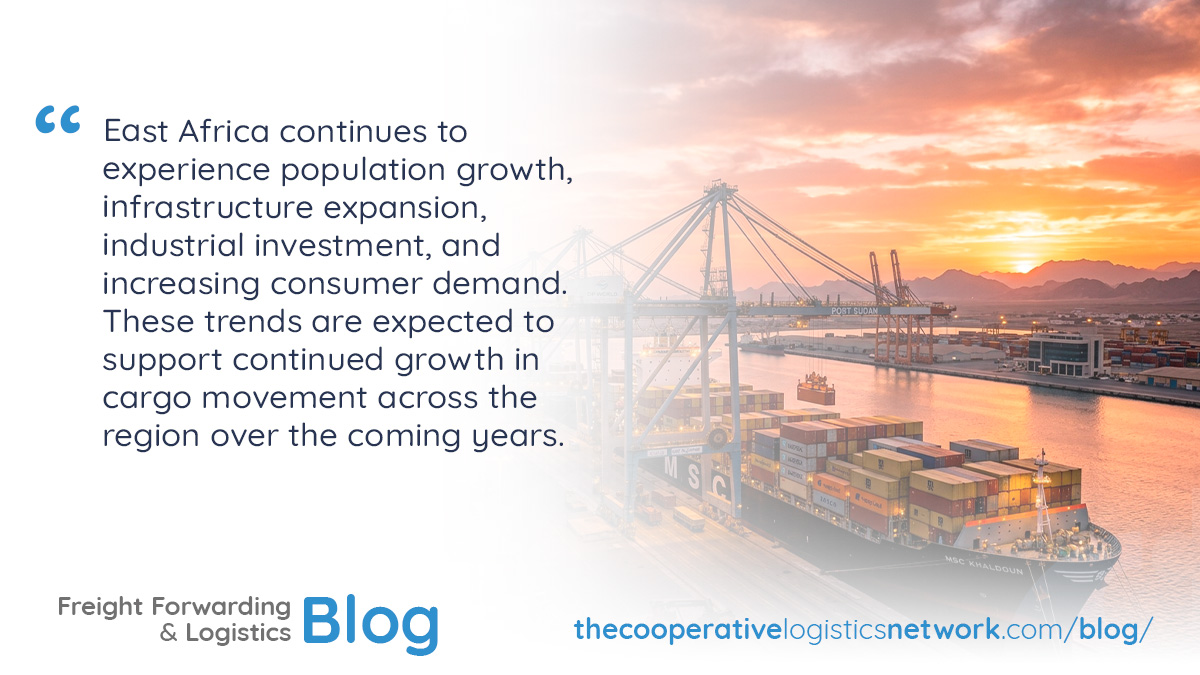
The long-term outlook for Port Sudan remains closely tied to broader regional trade development. East Africa continues to experience population growth, infrastructure expansion, industrial investment, and increasing consumer demand. These trends are expected to support continued growth in cargo movement across the region over the coming years.
At the same time, international shipping companies and logistics providers are paying closer attention to alternative regional gateways that can support more diversified supply chains. Ports positioned along major maritime routes are likely to remain strategically valuable as companies seek greater flexibility in global trade operations.
Port Sudan’s significance is therefore not limited to Sudan alone. Its position along the Red Sea and its role in connecting inland African markets with international shipping routes give it broader regional importance. As infrastructure improvements and logistics investments continue across East Africa, the port may become even more relevant for regional trade integration.
For companies involved in freight forwarding in Sudan, this creates both challenges and opportunities. The market requires resilience, operational expertise, and strong partnerships, but it also offers access to important trade corridors with long-term commercial potential.
In an increasingly complex logistics environment, ports like Port Sudan demonstrate why local expertise and international cooperation remain essential to global trade. Freight forwarders that can combine regional knowledge with reliable global partnerships will likely be best positioned to navigate the changing landscape of East African logistics in the years ahead.