

For businesses moving cargo from central Vietnam to European markets, Da Nang to Europe freight involves much more than finding a vessel and booking a container. The choice of port, transshipment hub, shipping line, inland transport and final European gateway can all influence cost, transit time and reliability. As Vietnam’s trade with Europe continues to grow, understanding the available routes is increasingly important for freight forwarders managing international shipments from Da Nang.
Da Nang is the main maritime gateway for central Vietnam and also serves manufacturers, exporters and businesses across the Central Highlands and neighbouring areas. While the port offers strong regional connectivity, Europe-bound cargo often requires careful coordination with larger Vietnamese or Asian hubs.
Why Da Nang Matters for Europe-Bound Cargo
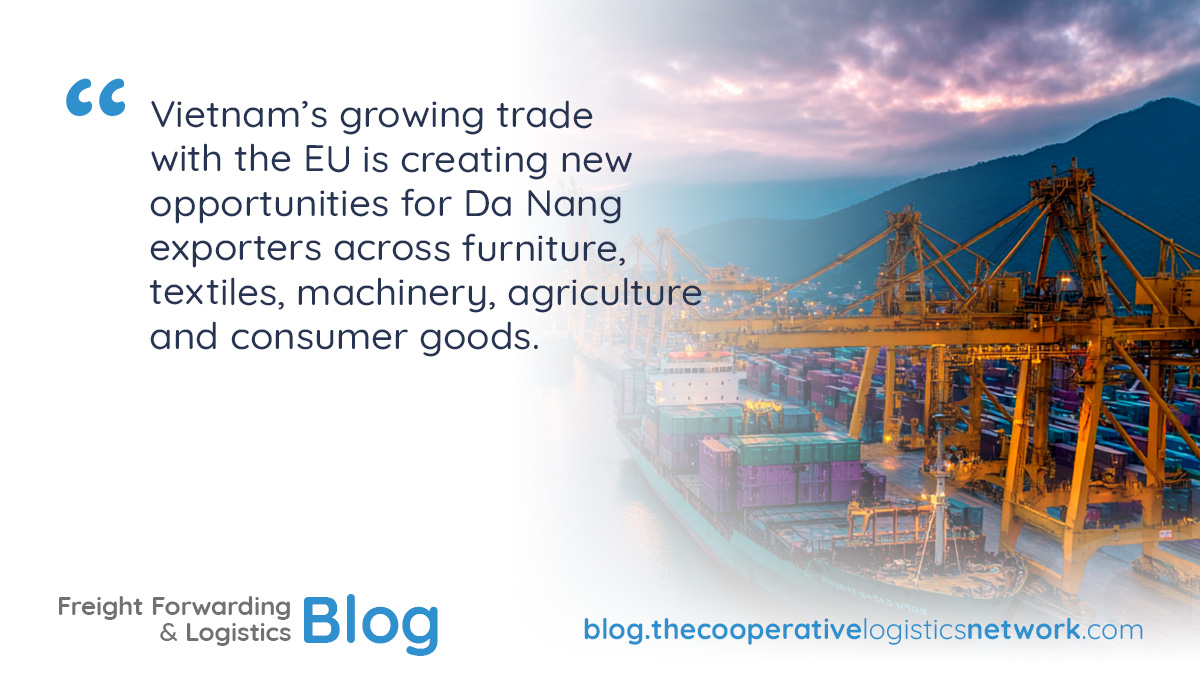
Vietnam has become an increasingly important manufacturing and sourcing destination for European companies. Trade between Vietnam and the EU exceeded €70 billion in 2025, supported by manufacturing growth, foreign investment and the EU-Vietnam Free Trade Agreement (EVFTA). For exporters based in and around Da Nang, this creates opportunities across industries such as furniture, textiles, consumer goods, machinery, agricultural products and industrial components.
Da Nang Port plays an important role in connecting central Vietnam with international markets. However, unlike Vietnam’s major deep-water gateways such as Cai Mep-Thi Vai, Da Nang’s container services are more heavily oriented towards regional Asian connections and feeder operations. This means that Da Nang to Europe freight often involves a transshipment leg before the cargo joins a long-haul Europe service. For freight forwarders, understanding this network is essential when comparing routing options for customers.
The Main Da Nang to Europe Freight Routes
There is no single route that works for every shipment. The most suitable option depends on the cargo, destination, required delivery date, available vessel space and the shipper’s budget. One common approach is to move cargo from Da Nang Port to a regional Asian hub before connecting with a Europe-bound vessel. Singapore, Port Klang and other major Asian hubs can provide connections to the long-haul services linking Southeast Asia with European ports.
Another option is to move the cargo inland to one of Vietnam’s larger deep-water gateways, particularly Cai Mep-Thi Vai in the south. From there, exporters can access direct or more frequent long-haul services to Europe. Current Asia-Europe services from Cai Mep, for example, include rotations connecting Vietnam with ports such as Rotterdam, Hamburg, Le Havre and Antwerp, although schedules and routing can change. The choice between these alternatives requires a comparison of the entire logistics chain rather than simply the ocean freight rate.
Da Nang to Europe via Regional Transshipment Hubs
For some shipments, keeping the cargo within Da Nang’s existing regional network before transferring it onto a Europe-bound service can be practical. Da Nang has established connections with ports across China, South Korea, Japan and other Asian markets, giving freight forwarders several potential feeder and transshipment possibilities.
This option can be particularly useful when the cargo originates close to Da Nang and avoiding a long domestic trucking leg is more important than securing the shortest possible ocean transit. The disadvantage is that every additional handling point can introduce another schedule dependency. A delay on the feeder leg can cause the shipment to miss its connecting vessel, potentially adding several days to the overall transit time.
Routing Through Cai Mep-Thi Vai
For larger volumes and shipments where direct long-haul connectivity is a priority, moving cargo from central Vietnam towards the Cai Mep-Thi Vai port cluster can be another option. Cai Mep has direct connections with Europe and can handle large container vessels, making it an important gateway for Vietnam-Europe trade. Current services connect the port with European destinations including Rotterdam and Hamburg.
However, moving cargo south from Da Nang adds a domestic inland transportation leg. Freight forwarders therefore need to compare the additional trucking cost and time with the potential advantages of fewer transshipment points and a more direct ocean service.
Choosing the Right European Gateway
The European destination also influences the best routing strategy. Rotterdam, Hamburg and Antwerp are among the major gateways used for Vietnam-Europe trade, while Le Havre, Felixstowe and other ports can be appropriate depending on the final destination and available services. For example, current shipping options from Da Nang to Rotterdam can involve around 30–51 days of ocean transit depending on the service selected.
The port of discharge, however, should not be selected solely according to the fastest sailing time. A slightly longer ocean route may be more efficient if it provides better inland connectivity to the consignee’s warehouse. A shipment destined for Germany could potentially benefit from a Northern European gateway such as Hamburg or Bremerhaven, while cargo destined for Belgium may be routed through Antwerp. The final decision should take into account inland transport, customs clearance, port charges and available delivery services.
Key Challenges for Freight Forwarders
Managing Da Nang to Europe freight requires attention to several potential pressure points. One of the biggest is transshipment dependency. When cargo needs to connect through another Asian port, the shipment becomes dependent on two or more vessel schedules. Missed connections can affect delivery commitments and create additional storage or handling costs. Capacity and equipment availability can also change according to market conditions. Peak seasons, sudden demand increases and carrier schedule adjustments can affect both rates and space availability.
Geopolitical disruption is another consideration. Asia-Europe services have continued to be affected by the security situation around the Red Sea, with major carriers operating services via the Cape of Good Hope on some routes. This can significantly increase sailing distances and transit times compared with traditional Suez Canal routings.
Documentation and customs compliance are equally important. European shipments may involve detailed requirements relating to customs declarations, rules of origin, product standards and other regulatory obligations. For freight forwarders, accurate documentation before departure can help prevent avoidable delays after arrival.
How Freight Forwarders in Da Nang Can Improve Routing Decisions
For freight forwarders in Da Nang, providing customers with more than one routing option can be a valuable competitive advantage. Instead of automatically selecting the cheapest sailing, forwarders can compare the complete door-to-door journey. This means looking at the cost of moving cargo from the supplier to Da Nang Port, feeder or trucking requirements, transshipment risks, ocean freight, European port charges and final delivery.
It is also useful to maintain relationships with multiple carriers and overseas agents. If a particular service becomes congested or a sailing is cancelled, having alternative partners can make it easier to reroute cargo without starting the search from scratch.For customers with urgent cargo, air freight may also be worth considering. Da Nang International Airport provides an alternative for time-sensitive shipments, although the higher cost makes it more suitable for valuable or urgent goods rather than large-volume cargo.
How The Cooperative Logistics Network Can Help Freight Forwarders in Da Nang
The Cooperative Logistics Network can help independent freight forwarders in Da Nang strengthen their international reach by connecting them with trusted logistics partners in Europe and other key markets.
For a shipment moving from Da Nang to Europe, having reliable overseas agents can simplify coordination at the destination, from customs clearance and documentation to inland transportation and final delivery. Through its global network, The Coop gives independent forwarders opportunities to develop relationships with partners in the markets they serve without needing to establish their own offices overseas.
This can be especially useful when handling new European destinations or looking for alternative partners during periods of congestion, capacity constraints or changing carrier schedules. By exchanging business opportunities and working with reliable agents across different countries, Da Nang-based forwarders can expand their service offering while maintaining control over their customer relationships.
Turning Route Knowledge into Better Service
The growth of Vietnam-Europe trade is creating opportunities for freight forwarders across the country, including those based in central Vietnam. For companies handling Da Nang to Europe freight, understanding the differences between feeder connections, transshipment hubs and alternative Vietnamese gateways can make it easier to build reliable and cost-effective transport solutions.
Rather than treating every shipment as a standard port-to-port movement, forwarders can create more value by assessing the complete journey and matching the routing strategy to the customer’s priorities. With the right carrier options, overseas partnerships and local expertise, Da Nang can serve as an effective starting point for connecting central Vietnam with European markets.