

A single missing signature on a dangerous goods declaration can pull an entire container off a vessel. Not the shipment inside it. The whole box, sometimes the whole booking, while the carrier waits for corrected paperwork that should have been right the first time. For cargo classified as hazardous, the declaration isn’t a formality sitting on top of the shipment. It’s the document that decides whether that shipment sails on schedule or sits on a dock.
Shippers who move dangerous goods regularly treat the declaration process like a checklist executed the same way every time. Shippers who treat it as an afterthought are the ones explaining to their customer why a shipment that should have arrived in three weeks is still sitting at origin.
What Goes Into a Dangerous Goods Declaration
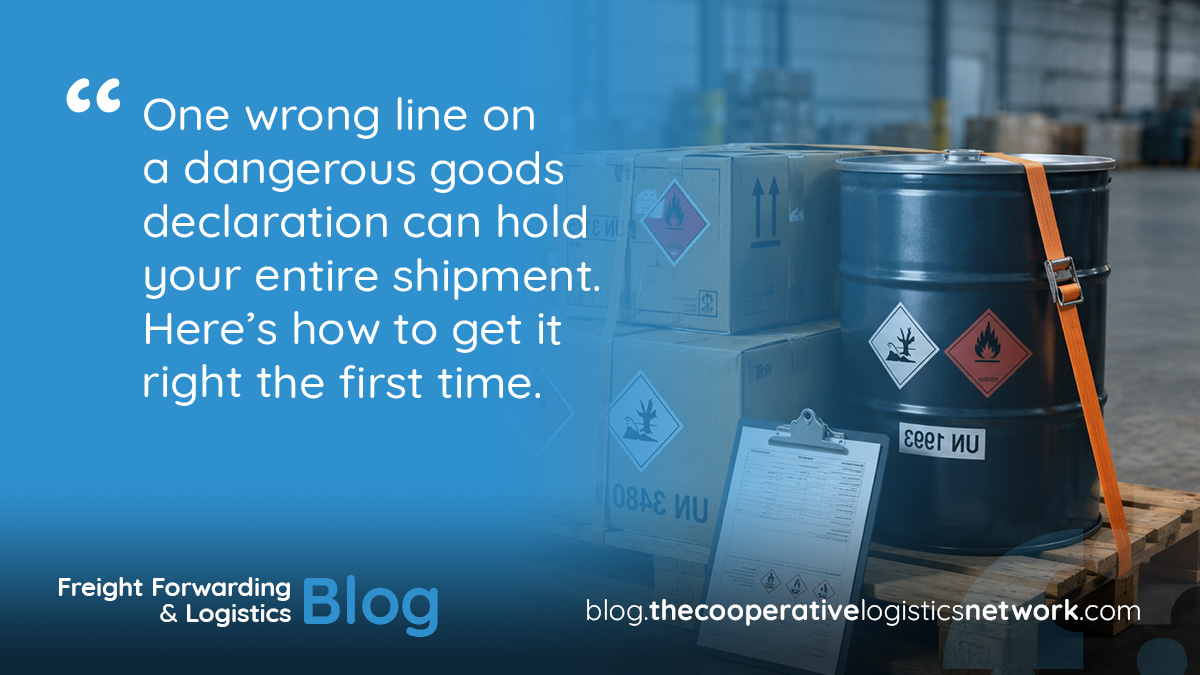
The declaration certifies that the cargo has been correctly classified, packaged, marked, labeled, and is fit for transport under international regulations, most commonly the IMDG Code for ocean freight. Every piece of that certification has to be accurate, because carriers and terminals rely on the declaration to decide how the cargo gets stowed, segregated from other hazardous cargo, and handled at every port along the route.
At minimum, a complete declaration includes the proper shipping name, UN number, hazard class and subsidiary risk, packing group, quantity and type of packaging, and the emergency contact information required for the cargo. Get any one of these wrong, and the declaration is invalid even if everything else on the page is perfect.
A shipper moving lithium batteries learned this the expensive way when a subsidiary risk was left off the declaration. The cargo sat at the terminal for four days while corrected paperwork worked its way through the carrier’s compliance team, and the shipper ate demurrage charges for a delay that a proper pre-shipment check would have caught in minutes.
Where Dangerous Goods Declarations Go Wrong
Most delays trace back to a small handful of recurring errors, and they’re almost always avoidable.
Misclassification. Getting the hazard class or packing group wrong is the single most common reason a declaration gets rejected. This usually happens when someone relies on an old Safety Data Sheet instead of checking current IMDG classification, or assumes a product’s classification hasn’t changed since the last shipment.
Incomplete or inconsistent information. The proper shipping name on the declaration has to match the packaging markings, the packing list, and the bill of lading exactly. Any mismatch between these documents raises a flag and stops the booking until it’s resolved.
Missing emergency contact details. Carriers require a 24-hour emergency response contact on file for the specific cargo being shipped, not a generic company number. A chemical exporter moving corrosive materials had a booking held at origin because the emergency contact listed wasn’t actually staffed around the clock, which is exactly what the requirement exists to catch.
Outdated regulatory information. The IMDG Code updates on a two-year cycle, and classifications, packing requirements, and documentation standards shift with each edition. A declaration prepared against an outdated version can be rejected even when everything on it was correct the last time it shipped.
How to Prepare a Dangerous Goods Declaration Without Delays
Getting this right consistently comes down to five practices.
Classify before you book, not after. Confirm the current UN number, hazard class, and packing group against the latest IMDG Code before the shipment is ever scheduled. Classification is the foundation everything else sits on, so get it locked in first.
Cross-check every document against the others. The proper shipping name, quantities, and markings need to match exactly across the declaration, packing list, and bill of lading. Build this cross-check into your process rather than assuming consistency.
Keep emergency contact information current and specific. Confirm the listed contact is staffed and equipped to respond to questions about the actual cargo being shipped, not a general company line.
Review the current IMDG edition on a fixed schedule. Set a recurring check, ideally tied to the code’s update cycle, so classification and documentation practices never drift out of date without anyone noticing.
Work with a forwarder who reviews DG paperwork before it reaches the carrier. A pre-submission check catches errors while they’re still cheap to fix, instead of after the carrier’s compliance team has already flagged the booking and the clock on demurrage has started running.
The Bottom Line
A dangerous goods declaration only works if every detail on it is correct, consistent, and current. The shipments that move without friction are the ones where classification happened early, documentation was cross-checked before submission, and emergency contact details were verified rather than copied from the last shipment. The forwarders who build this discipline into every DG booking are the ones whose hazardous cargo actually sails on the date it was supposed to, while everyone else is still waiting on corrected paperwork.