
Every so often, a fraud scheme gets specific enough, and repeats often enough, that the industry gives it a name. The “mango scam” is one of those. It first surfaced with shipments of mangoes from Dubai and the Indian subcontinent, and it has resurfaced more than once since, most recently tied to fruit shipments out of Bangladesh. The commodity keeps changing. The playbook doesn’t.
How the Mango Scam Works
The scheme follows a consistent pattern. A newly formed importer, or one that looks legitimate on the surface, approaches a freight forwarder with an appealing volume of business, typically perishable goods that need to move quickly and don’t leave much time for slow, careful due diligence. That urgency is the point. Fresh fruit has a shelf life, and criminals know that pressure to keep cargo moving makes forwarders less likely to dig deep into a new customer’s financial standing before extending credit.
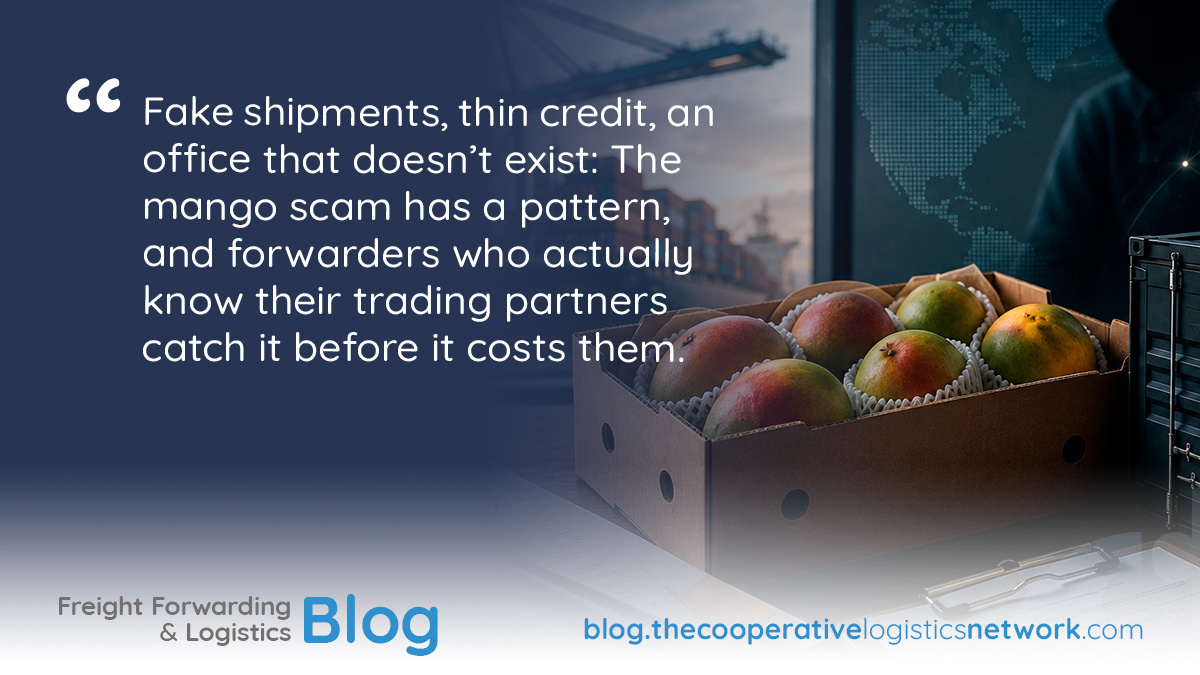
Underneath the surface, the warning signs are usually there for anyone who looks. A closer check typically reveals a company with very few real assets, a poor or non-existent credit rating, and a registered address that turns out to be a shared office space rather than an actual operating business. The scale of business being proposed rarely matches what a company with that profile could plausibly finance. By the time the freight forwarder realizes something is wrong, the shipments have already moved and the bills are already outstanding. The company disappears, and the forwarder is left absorbing a loss that has run into five figures in documented cases.
Why the Same Scheme Keeps Coming Back
What makes the mango scam worth naming specifically, rather than treating as just one more generic fraud story, is how persistently it has resurfaced. Industry associations have flagged this exact pattern multiple times in recent years, each time under a different shell company, a different claimed origin, and a different fruit shipment, but with the same underlying structure every time. That repetition tells you something important: this isn’t a one-off criminal act that got caught and stopped. It’s a playbook that keeps getting reused because it keeps working, and it keeps working because the pressure of moving perishable cargo quickly discourages the due diligence that would catch it.
This isn’t limited to one country either. The pattern has shown up across the UK and continental Europe, which suggests the people running it, or others who have simply copied a proven method, are actively working multiple markets rather than targeting one region repeatedly.
What Forwarders Can Actually Check
The good news is that the warning signs in a mango-scam-style setup are fairly consistent, which means they are also checkable before you extend credit, not just after the loss:
- Registered address. A quick independent check, rather than taking the address on the paperwork at face value, will often reveal a shared office or virtual address rather than a real operating facility.
- Credit history. A poor or “no credit” rating on a company proposing a significant volume of business is a mismatch worth investigating before booking the shipment, not after.
- Proportionality. If the scale of business being proposed doesn’t reasonably match the size or financial standing of the company asking for it, that gap is itself the warning sign.
- Urgency. Perishable cargo will always come with some time pressure, but a new counterparty using that urgency to rush past your normal credit checks is a pattern worth recognizing on its own.
If you suspect you are dealing with this kind of setup, report it to the police through the official fraud reporting channel, and where a company itself appears to be part of the scheme, file a complaint with the relevant companies registry so the fraudulent entity gets flagged for others.
Why a Trusted Network Catches What a Stranger Can’t
The mango scam succeeds because it targets forwarders doing business with a counterparty they don’t actually know, under conditions designed to keep them from finding out in time. That is exactly the gap a genuinely trusted network is built to close.
Inside The Cooperative Logistics Network, members aren’t matched with strangers pulled from an open directory. We accept a capped number of members per city, all of whom are strictly vetted. Relationships among the members are reinforced through real, ongoing contact, including face-to-face discussions at our Annual Meetings. That familiarity means that when an unfamiliar company shows up proposing an unusually large volume of business under time pressure, a Cooperative member has somewhere to turn before committing: a fellow member who may have already seen the same company, the same pattern, or the same red flags. A large, anonymous marketplace network doesn’t offer that same check, because the whole model depends on parties transacting without necessarily knowing each other at all.
The Takeaway
The mango scam will keep resurfacing under new names and new commodities, because the pressure it exploits, urgency plus unfamiliarity, isn’t going away. What forwarders can control is how exposed they are to it. Checking the basics before extending credit, and working within a network where members actually know each other well enough to compare notes, are the two things that turn this scheme from a costly surprise into a pattern you recognize before it costs you anything at all.