

The Narita International Airport air freight challenges faced by logistics providers reflect the complexity of operating within one of Asia’s busiest cargo gateways. Located near Tokyo, Narita International Airport has long served as one of Japan’s most important international cargo hubs, handling high-value exports and time-sensitive shipments destined for markets around the world. From electronics and automotive components to pharmaceuticals and precision machinery, Japan’s export-driven economy depends heavily on efficient air freight operations. Freight forwarders managing Tokyo air freight operations play a critical role in keeping these supply chains moving smoothly. However, increasing cargo volumes, infrastructure constraints, and evolving regulatory requirements continue to create operational challenges.
Understanding these issues is essential for forwarders seeking to maintain efficiency while supporting Japan’s highly specialized logistics ecosystem.
Why Narita Is a Key Hub for Global Air Cargo
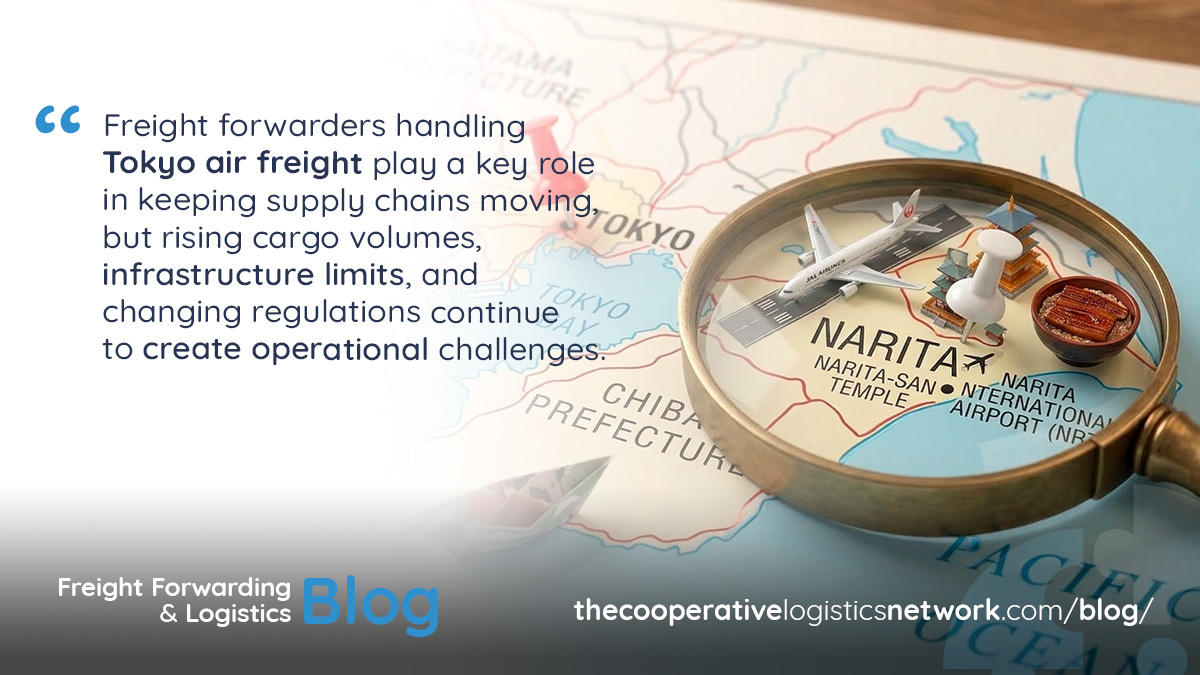
For decades, Narita International Airport has been one of the primary gateways for international cargo entering and leaving Japan. Its location close to Tokyo’s industrial and commercial centers allows companies to ship goods quickly to global markets. The airport supports a wide range of industries that rely heavily on air freight. These include advanced electronics, automotive manufacturing, pharmaceuticals, and high-tech equipment. Many of these sectors require high-value cargo logistics and precise delivery schedules, making air freight the preferred mode of transport. Narita’s role as a Japan international air cargo hub also connects the country to major global trade routes. Cargo flights link Tokyo with logistics centers across North America, Europe, and Asia, supporting the movement of goods within the broader Asia-Pacific air cargo hub network. Because of this, even minor disruptions within Narita air cargo logistics can have far-reaching impacts on international supply chains.
Key Narita International Airport Air Freight Challenges Facing Forwarders
Despite its strong infrastructure and global connectivity, the airport faces several operational pressures that can complicate logistics planning for freight forwarders.
Increasing cargo volumes
One of the most significant Narita International Airport air freight challenges is the steady growth in cargo demand. Japan’s export sectors continue to generate large volumes of high-value shipments, particularly in technology and manufacturing. This growing demand can place pressure on cargo terminals, aircraft capacity, and ground handling services. During peak shipping periods, forwarders may experience longer processing times or limited cargo space on outbound flights.
Limited slot availability
Narita operates under strict flight slot regulations designed to manage air traffic efficiently. While these restrictions help maintain operational safety, they can also limit the number of cargo flights available during peak hours. For forwarders handling urgent shipments, these constraints can make scheduling more complicated and require additional coordination with airlines.
Complex customs procedures
Another important factor affecting freight forwarding in Tokyo Japan, involves compliance with Japan’s regulatory framework. The country maintains strict documentation and customs clearance requirements, particularly for high-value electronics, pharmaceuticals, and controlled technology exports. Ensuring that all paperwork is completed correctly is essential to avoid delays within the Narita cargo handling logistics process.
Infrastructure limitations
While Narita has expanded its cargo facilities over the years, rising cargo volumes continue to test the limits of available infrastructure. Congestion in cargo terminals, truck access delays, and warehouse capacity issues can occasionally affect cargo handling efficiency. These operational pressures contribute to air freight delays in Japan, particularly during periods of high export activity.
The Impact on Freight Forwarders
For logistics providers working within Narita air cargo logistics, these operational challenges require constant planning and coordination.
Time-sensitive shipments
Many industries in Japan depend on fast international deliveries. Automotive parts, electronic components, and medical equipment often require precise delivery windows. Delays in cargo processing or flight schedules can disrupt production timelines for manufacturers.
High-value cargo handling
Japan is known for exporting high-tech and high-value goods. These shipments require careful handling, secure storage, and reliable tracking systems. Freight forwarders must maintain strict quality standards when managing such cargo.
Global supply chain coordination
Because Narita connects Japan to global trade routes, forwarders must coordinate shipments across multiple regions. This requires strong collaboration with overseas logistics partners who understand the complexities of international cargo movements.
Strategies to Overcome Narita’s Air Freight Challenges
Although Narita International Airport’s air freight challenges can create operational hurdles, freight forwarders can adopt several strategies to minimize disruptions.
Advanced shipment planning
Preparing cargo documentation and booking flight capacity well in advance helps avoid last-minute complications. Early coordination with airlines also increases the likelihood of securing space during peak shipping periods.
Diversified routing options
Some forwarders manage risk by considering alternative cargo routes within Japan’s aviation network when necessary. Flexibility in routing can help maintain supply chain continuity during peak demand periods.
Strong local partnerships
Working with experienced ground handlers, customs brokers, and logistics partners in Tokyo ensures smoother cargo handling and faster issue resolution when unexpected delays occur.
Why Global Networks Matter for Forwarders in Tokyo
For freight forwarders operating in a complex environment like Narita, global collaboration is essential. International shipments depend on trusted partners who can coordinate cargo movements efficiently across different countries and transport modes.
One example is The Cooperative Logistics Network, a global alliance of independent freight forwarders that connects companies across nearly 365 cities worldwide.
For forwarders in Tokyo, joining such a network offers significant advantages. Members gain access to carefully vetted logistics partners across major markets, helping ensure reliability when coordinating international shipments. Another key benefit is the network’s Annual Meetings, where members meet face-to-face to strengthen relationships and explore business opportunities. These gatherings allow forwarders to build trust with partners who handle their cargo at origin and destination. For example, a Tokyo-based forwarder shipping electronics to Europe may rely on a trusted partner within the network to manage final delivery. Having established relationships within a global community can greatly improve efficiency and reduce operational risks. In an environment where Tokyo freight forwarders’ logistics operations depend heavily on international cooperation, these global partnerships provide a valuable competitive advantage.
The Future of Air Cargo at Narita
Despite the operational pressures associated with Narita International Airport air freight challenges, the airport remains one of the most important cargo gateways in Asia. Continued investment in infrastructure, technology, and cargo facilities aims to strengthen Narita’s role as a global logistics hub. As Japan’s industries continue to export advanced technology and high-value goods, demand for reliable air freight services will remain strong. Freight forwarders capable of navigating operational challenges while maintaining efficient international partnerships will play a vital role in sustaining these global supply chains. With the help of careful planning, operational expertise, and strong global networks, forwarders can successfully manage the complexities of air freight operations at Narita and continue supporting the flow of international trade.