

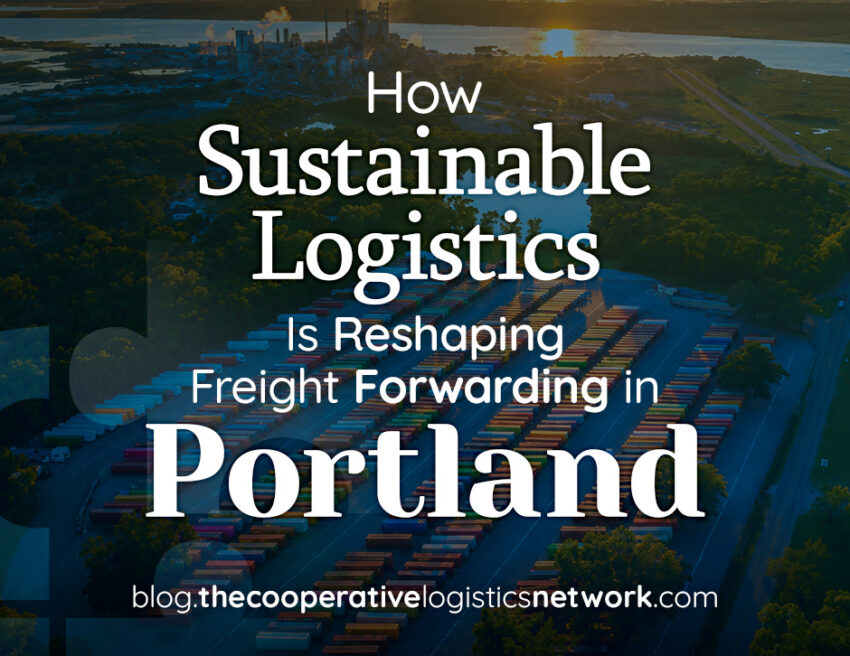
Sustainability is increasingly shaping how freight moves, how supply chains are planned, and how shippers choose their logistics partners. For freight forwarders, this shift is changing operational priorities across routing, warehousing, transportation, and partner selection. In the Pacific Northwest, these changes are becoming especially visible. Sustainable logistics in Portland has evolved from a niche conversation into a practical business reality driven by efficiency, infrastructure planning, and customer expectations.
What makes Portland particularly relevant is the way the city aligns geography, transportation networks, and supply chain planning. Positioned along major Asia-Pacific trade routes and supported by strong intermodal connections, Portland offers freight forwarders access to a logistics ecosystem that supports both operational performance and long-term sustainability goals. As supply chains in Portland continue to prioritize efficiency and resilience, the city is becoming an increasingly strategic location for forwarders looking to strengthen their regional and international operations.
Why Portland Has Emerged as a Pioneer in Sustainable Logistics
Portland has built a reputation as one of the most sustainability-focused cities in the United States, and that mindset has gradually extended into transportation and logistics planning. Long before sustainability became a global supply chain priority, Portland was already investing in urban planning, public transportation, rail infrastructure, and cleaner freight mobility initiatives. This broader regional focus created the conditions for more efficient logistics systems to develop naturally over time. The Pacific Northwest has also seen growing pressure from both consumers and businesses to improve environmental performance across supply chains. Many companies operating in the region actively evaluate transportation efficiency, warehouse locations, and fuel consumption as part of their long-term planning. As a result, logistics providers operating through Portland are increasingly adapting to customer expectations around green logistics and supply chain optimization.
Another reason sustainable logistics in Portland continues to gain attention is the city’s strong integration of multimodal transportation. Portland supports cargo movement through rail freight, trucking networks, maritime infrastructure, and nearby air cargo facilities, allowing forwarders to combine transportation modes more efficiently. Intermodal transport often improves cargo flow while optimizing fuel usage and reducing unnecessary inland trucking miles. Warehouse development patterns around Portland also contribute to more efficient distribution planning. Many distribution facilities serving the Pacific Northwest are positioned close to major transportation corridors, allowing faster cargo transfers and shorter delivery distances. This creates practical operational benefits for freight forwarders managing regional and international shipments.
What makes Portland particularly interesting for the logistics sector is that sustainability here is closely tied to efficiency. Companies are not simply pursuing environmental targets. They are actively looking for ways to improve route planning, reduce delays, optimize cargo movement, and create more resilient supply chains. In practice, these goals often align.
Why Portland Is Well Positioned for Sustainable Logistics
Portland occupies a unique position within the Pacific Northwest logistics landscape. The region combines maritime access, rail connectivity, warehousing infrastructure, and inland transportation links in a way that supports efficient cargo movement across the western United States. The Port of Portland continues to play an important role in handling containerized cargo, automobiles, agricultural products, and specialized freight. Beyond maritime activity, the city benefits from strong rail freight connections linking the Pacific Northwest with inland US markets. Rail and intermodal transportation have become increasingly important as companies look for ways to improve logistics efficiency while optimizing fuel consumption and reducing long-haul trucking dependency.
Portland’s location also provides direct access to major regional markets including Seattle, Northern California, Idaho, Utah, and the broader Midwest through inland rail corridors. For freight forwarders, shorter inland routes and integrated multimodal transportation networks create opportunities to improve transit predictability and streamline cargo distribution. The Pacific Northwest itself has emerged as a region where sustainability initiatives influence infrastructure planning and corporate supply chain strategies. Many importers and exporters operating in the region are actively reviewing transportation efficiency, warehouse placement, and routing structures as part of broader sustainable supply chain objectives. This trend is directly influencing freight forwarding operations.
Sustainable Logistics Portland and the Shift in Freight Forwarding Operations
The conversation around sustainable logistics in Portland is increasingly connected to operational efficiency rather than branding alone. Freight forwarders are adapting to a market where clients expect smarter routing decisions, better shipment visibility, and more coordinated cargo movement across the supply chain.
One of the biggest changes involves route optimization. Shippers are paying closer attention to how cargo moves from origin to final destination, especially when inland transportation costs represent a significant portion of the total landed cost. More companies are looking for routing strategies that combine maritime transport, rail freight, and regional trucking in a more balanced way.
Cargo consolidation is also becoming more important. Instead of relying on fragmented shipments, many forwarders are improving container utilization and consolidating cargo flows to optimize transportation efficiency. This approach supports both cost control and broader green logistics objectives. Digitalization is another major factor shaping freight forwarding Portland operations. Real-time shipment tracking, warehouse visibility systems, and transportation management platforms are allowing forwarders to coordinate cargo more efficiently across multiple modes of transport. Visibility has become especially important for clients managing inventory planning and time-sensitive shipments.
According to the US Environmental Protection Agency, freight transportation represents a significant share of supply chain emissions, with trucking accounting for a major portion of freight-related fuel consumption in the United States. This has accelerated interest in rail and intermodal transport solutions, especially across regions like the Pacific Northwest where inland rail infrastructure plays a major role in cargo distribution. At the same time, many multinational shippers are now incorporating environmental performance into logistics procurement decisions. Freight forwarders are increasingly expected to demonstrate operational efficiency, optimized routing, and stronger coordination across supply chain partners.
The Growing Importance of Supply Chain Visibility
As supply chains become more interconnected, visibility is becoming a central part of logistics planning. Clients want clearer insight into shipment timelines, routing decisions, warehousing stages, and transportation performance.This shift is particularly relevant in complex international shipments involving multiple handovers across ports, rail operators, trucking providers, customs brokers, and destination agents. Delays or communication gaps at one stage can quickly affect the entire shipment lifecycle. For freight forwarders, supply chain visibility now extends beyond customer service. It directly affects operational planning, cargo coordination, and transportation efficiency. Better visibility allows companies to anticipate disruptions earlier, coordinate warehouse scheduling more effectively, and improve overall shipment consistency.
In regions like Portland, where multimodal transportation plays a major role, maintaining visibility across every stage of the cargo journey has become increasingly valuable. The ability to coordinate shipments smoothly between maritime, rail, and road transportation systems supports stronger logistics efficiency and more reliable delivery performance.
Why Reliable International Partnerships Matter More Than Ever
Sustainable logistics does not depend only on infrastructure or transportation assets. It also depends on coordination between partners operating across different markets. A shipment moving smoothly through Portland can still face delays or inefficiencies if overseas coordination is inconsistent. This is why international partnerships are becoming increasingly important for freight forwarders managing global cargo flows. Strong coordination between origin and destination partners improves communication, reduces operational friction, and creates more predictable cargo movement across borders.
For freight forwarders operating in Portland, joining a global network like The Cooperative Logistics Network provides an important operational advantage. Instead of relying on unfamiliar overseas contacts, members gain access to carefully vetted freight forwarders across more than 140 countries worldwide.
Why Networks Like The Cooperative Logistics Network Matter
The Cooperative Logistics Network supports freight forwarders through a structured framework designed to improve collaboration and operational consistency.
Capped Territories
The network maintains a controlled number of members per city, allowing forwarders in Portland to strengthen their visibility within the group while reducing internal competition. This creates stronger opportunities for inbound business and long-term cooperation.
Global Reach with Trusted Partners
The Cooperative Logistics Network connects members with more than 360 vetted freight forwarders worldwide. For companies managing international cargo flows, this provides access to reliable overseas partners who understand local compliance requirements, operational expectations, and shipment coordination processes.
Stronger Coordination Across Supply Chains
Reliable partnerships improve shipment consistency across multimodal transportation networks. Better communication between agents helps reduce delays, optimize cargo transfers, and maintain visibility throughout the shipment lifecycle. This supports both logistics efficiency and broader sustainable supply chain goals.
Face-to-Face Relationship Building
The network’s Annual Meetings allow members to build direct relationships with partners from around the world through structured one-to-one meetings. In freight forwarding, these relationships remain an important part of operational success, especially when handling complex international shipments.
Challenges Freight Forwarders Continue to Navigate
While Portland offers strong positioning for sustainable logistics growth, freight forwarders continue to operate within an increasingly complex market environment. Customer expectations continue to evolve alongside transportation costs, infrastructure pressures, and changing regulatory requirements.
Balancing transit efficiency with cost management remains a key operational priority. At the same time, clients increasingly expect stronger shipment visibility, optimized transportation planning, and dependable communication across supply chain partners.
Freight forwarders are also adapting to changing cargo flows as companies diversify sourcing strategies and reassess distribution networks across the United States. This creates new opportunities while increasing the importance of operational flexibility and reliable coordination.
Looking Ahead
The role of sustainable logistics Portland will continue to expand as supply chains prioritize efficiency, resilience, and smarter transportation planning. Portland’s location, intermodal infrastructure, and Pacific Northwest connectivity position the city as an increasingly relevant logistics hub within evolving global trade networks.
For freight forwarders, sustainable logistics is becoming closely tied to operational performance. Efficient routing, coordinated partnerships, supply chain visibility, and integrated multimodal transportation are now central to long-term competitiveness.
As cargo volumes continue to evolve across the Pacific Northwest, forwarders who invest in stronger international partnerships and more structured operational networks will be better positioned to build consistent, scalable logistics solutions. Increasingly, sustainable supply chains are being shaped not only by infrastructure, but by the strength of the partnerships supporting them.