

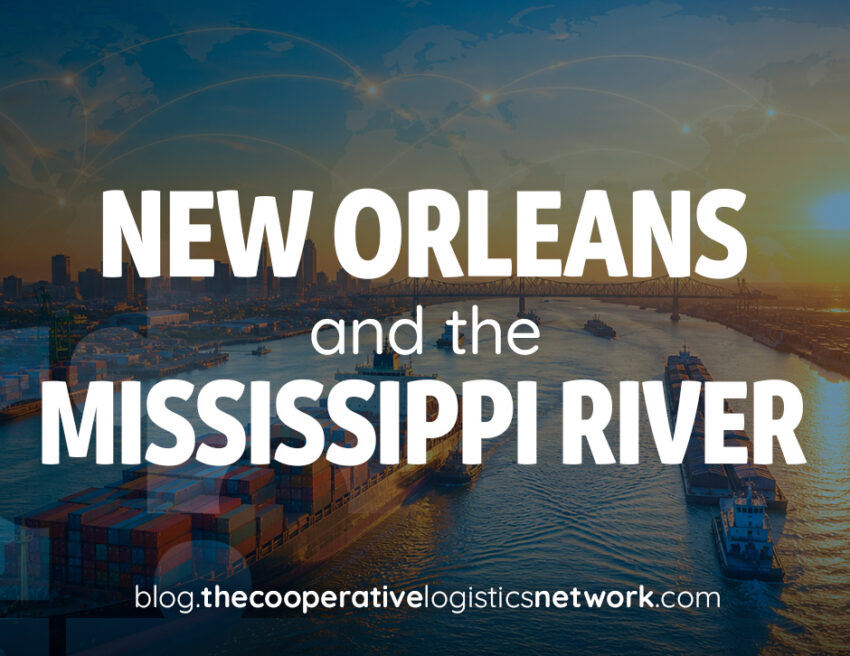
Some ports move cargo, and then there are ports that move entire regions. New Orleans falls into the second category. What makes it different isn’t just its position on the Gulf. It’s what sits behind it. The city is the southern gateway to the Mississippi River system, a vast inland network that reaches deep into the United States. That connection turns New Orleans into far more than a coastal port. It becomes the link between global shipping lanes and the economic core of the country.
Where Ocean Freight Meets Inland America
At most ports, cargo arrives, gets cleared, and moves outward by truck or rail. In New Orleans, there’s a third dimension. Ocean freight coming into the Port of New Orleans doesn’t just disperse along the coast. It feeds directly into inland waterways. Barges move containers and bulk cargo northbound, connecting the Gulf to cities and industrial zones across the Midwest. What this means is reach. From a single port call, cargo can access markets thousands of miles inland without relying entirely on road or rail. For importers, that opens up cost-efficient distribution into the heart of the U.S. For forwarders, it creates routing flexibility that few gateways can match.
The Mississippi River: A Working Freight Corridor
The Mississippi River is a logistics engine. Northbound barge traffic carries everything from steel and machinery to chemicals and project cargo. Southbound flows are just as important, if not more so. Agricultural products like grain and soybeans move downstream in enormous volumes, feeding global export demand. Compared to trucking, barge transport offers significant cost advantages for heavy and bulk cargo. Compared to rail, it provides scalability. A single tow can move the equivalent of hundreds of truckloads. That efficiency is what keeps the river central to U.S. trade. Of course, it’s not without complexity. Water levels, seasonal shifts, and weather disruptions all play a role. Planning river-based logistics requires a different mindset that blends timing, flexibility, and local knowledge.
Why It Matters for Exports as Much as Imports
It’s easy to think of ports primarily as entry points. New Orleans flips that perspective. The river system makes it one of the most important export gateways in the United States. Goods produced across the Midwest, agricultural commodities, raw materials, and industrial products, flow downstream to the Gulf before heading to international markets. This creates a natural balance. Import containers can move inland efficiently, while export cargo fills outbound capacity. For freight forwarders, that balance can translate into better equipment availability, more competitive pricing, and fewer empty repositioning challenges. In practical terms, New Orleans isn’t just receiving cargo. It’s redistributing it in both directions.
Multimodal Strength: Barge, Rail, and Road
Another layer that strengthens New Orleans is its multimodal integration. Cargo doesn’t rely on a single mode. It can move from vessel to barge, from barge to rail, or directly onto trucks, depending on urgency, cost, and final destination. This flexibility allows forwarders to tailor solutions instead of forcing shipments into a fixed structure. For project cargo and breakbulk shipments, this is especially valuable. Oversized freight that may struggle in more congested or container-focused ports often finds a smoother path through New Orleans.
Why Networks Like The Cooperative Logistics Network Matter
Operating out of New Orleans gives freight forwarders a powerful advantage but it also comes with a certain level of complexity. You’re not just dealing with ocean freight. You’re coordinating between vessels, barges, rail, and trucking. You’re aligning port schedules with river conditions. And you’re often managing cargo that doesn’t simply arrive and get delivered locally, but continues deep into the U.S. or originates far inland before export.That kind of operation doesn’t work in isolation. This is where being part of a network like The Cooperative Logistics Network starts to make a tangible difference. It’s about having the right partners at every stage of a shipment that rarely stays within one geography. Here’s what that looks like in practice:
Stronger Positioning in a Strategic Gateway
The Cooperative Logistics Network limits membership per city, even in major logistics hubs. For a forwarder in New Orleans, that translates into something simple but valuable: fewer competitors within the same network and greater exposure to inbound shipment requests. When overseas agents need a reliable partner to handle cargo moving through the Mississippi River system, they’re not choosing from an overcrowded list. They’re working with a select group of vetted operators who understand how this gateway actually functions.
Get in touch with us to know more!
A Network That Matches the Complexity of the Trade Lane
Shipments routed via the Mississippi River don’t begin or end at the port. They involve inland origins, multimodal transitions, and international destinations. The Cooperative connects members with over 360 vetted partners across 140 countries. That means a shipment moving from the U.S. Midwest to Asia or arriving from Europe and heading inland can be handled by trusted agents at every step. Instead of piecing together unfamiliar contacts, forwarders work within a structure built on reliability and shared standards.
Access to the Right Kind of Business
New Orleans is a key hub for bulk, breakbulk, and project cargo. These shipments often require coordination across multiple regions and specialized handling. Within the network, members actively refer business to one another. For forwarders in New Orleans, that opens the door to cargo flows that specifically benefit from this gateway—whether it’s export cargo moving downstream or imports heading inland via barge. It’s not just more volume. It’s more relevant volume.
Face-to-Face Relationships That Actually Matter
In a logistics chain that spans ports, rivers, and inland terminals, trust isn’t optional. The network’s Annual Meeting creates a structured setting where members meet, discuss operations, and align expectations. For New Orleans-based forwarders, this is a chance to connect directly with partners handling cargo at origin or destination—partners who will be part of the same shipment chain. Those conversations tend to translate into smoother coordination and fewer surprises when cargo is in transit.
A Gateway That Works Both Ways
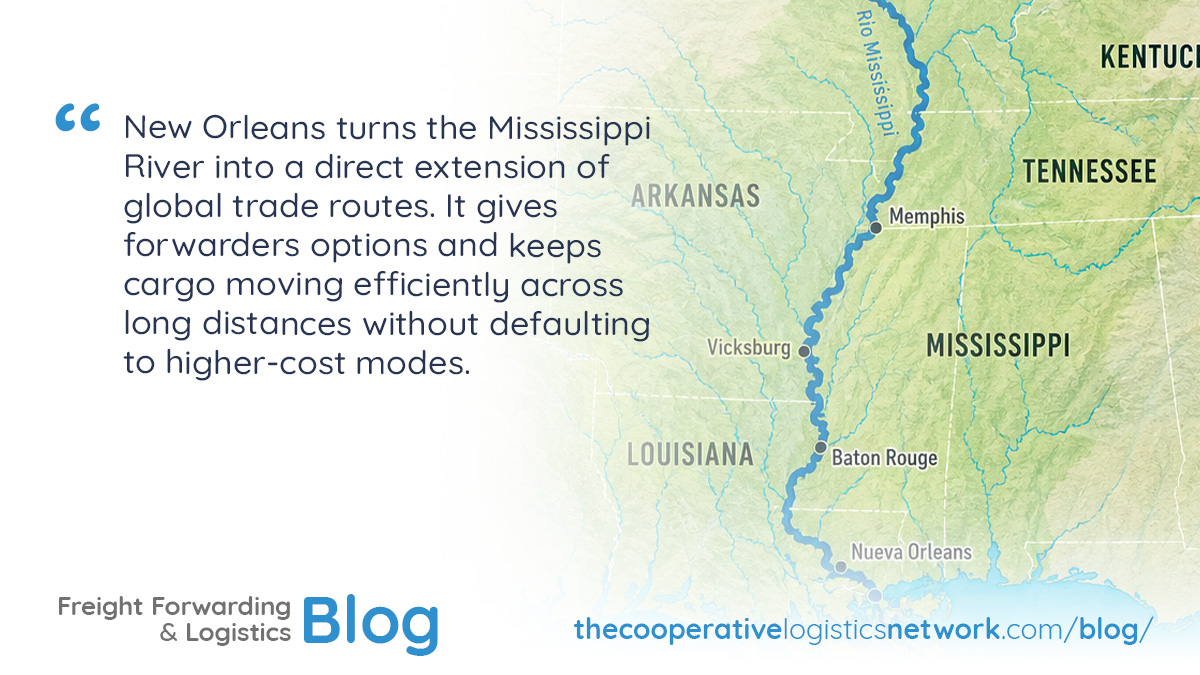
New Orleans doesn’t compete with the largest container ports on volume alone. Its strength lies in how it connects systems that are usually treated separately, ocean freight and inland logistics. That’s what makes it so relevant. It turns the Mississippi River into a direct extension of global trade routes. It gives forwarders options and keeps cargo moving efficiently across long distances without defaulting to higher-cost modes. For companies looking at U.S. logistics beyond the usual coastal gateways, New Orleans offers something different: a route into the country that is as much about where cargo is going as where it arrives.