

Canada’s Arctic isn’t just an expanse of ice and wilderness anymore. It’s slowly becoming one of the most talked-about frontiers in global logistics. With melting ice revealing navigable passages and policymakers pushing the Northern Corridors initiative, the region is being reimagined as a new gateway for world trade. The idea of Arctic trade routes isn’t just a far-fetched vision for the future; it’s already starting to reshape how we think about global shipping.
Why Arctic Trade Routes Matter More Than Ever
For decades, the thought of ships crossing through the Northwest Passage was mostly confined to explorers’ journals and adventurous documentaries. But as climate change alters the Arctic landscape, what was once impassable for much of the year is now open for navigation during longer seasons. This shift means shorter routes between Asia, Europe, and North America, cutting thousands of kilometers and saving both time and fuel.
The Canada Arctic trade routes promise to reduce congestion in the Panama and Suez Canals, offering an alternative that could redefine global maritime logistics. In fact, new Arctic trade routes might turn the Canadian North into a crucial link between global supply chains, connecting continents through the Arctic Circle trade routes that were once frozen out of economic reach.
The Northern Corridors Initiative: Canada’s Big Play
To make this vision real, Canada is betting on the Northern Corridors initiative, a national project aimed at developing transport, energy, and communications infrastructure across the northern and remote regions. The goal is simple but ambitious: connect Canada’s Arctic and mid-north to the global economy.
Think of it as a modern Silk Road, but through snow and sea ice. This massive undertaking involves expanding ports, airstrips, railways, and broadband networks to support the growing demand for Arctic shipping lanes. It’s about more than just building infrastructure, it’s about ensuring the Canadian Arctic becomes a viable, reliable, and safe trade corridor for the decades to come.
How Canada Is Developing Arctic Trade
So how exactly is Canada developing Arctic trade? The strategy revolves around building Canadian Arctic infrastructure capable of supporting both commercial and environmental sustainability. That means constructing deep-water ports like the one in Iqaluit, improving icebreaking capabilities, and enhancing weather and navigation systems to make Northwest Passage shipping safer. The government, along with Indigenous communities and private investors, is focusing on responsible growth. There’s a clear understanding that the Arctic is an ecological treasure. Therefore, striking the right balance between opportunity and protection is key.
Challenges of Shipping Through the Northwest Passage
Of course, it’s not all smooth sailing, literally. The challenges of shipping through the Northwest Passage are plenty. Unpredictable ice conditions, limited search and rescue infrastructure, high insurance costs, and environmental concerns all play a part. Unlike established global routes, the Arctic still lacks a full logistics ecosystem: fewer ports, limited repair facilities, and a fragile communication network. And then there’s the question of sovereignty. As more nations eye potential Arctic trade routes, geopolitical tension over territorial claims and maritime rights will likely heat up. Canada’s challenge is to assert control and cooperation without alienating key partners in Arctic development.
Investing in Canada’s Arctic Infrastructure
That’s why investing in Canada’s Arctic infrastructure is a national priority. Beyond ports and icebreakers, there’s a growing need for sustainable energy sources, better housing, and improved supply lines for northern communities. Stronger infrastructure will not only support trade but also improve living standards for people in the region, creating a more inclusive model of development. Private and public sector investments are already flowing in, focusing on future trans-Arctic shipping routes. Logistics companies, shipping alliances, and even tech startups are exploring ways to optimize Arctic shipping lanes using satellite data, digital navigation tools, and predictive ice mapping.
The Benefits of the Northern Corridors for Logistics
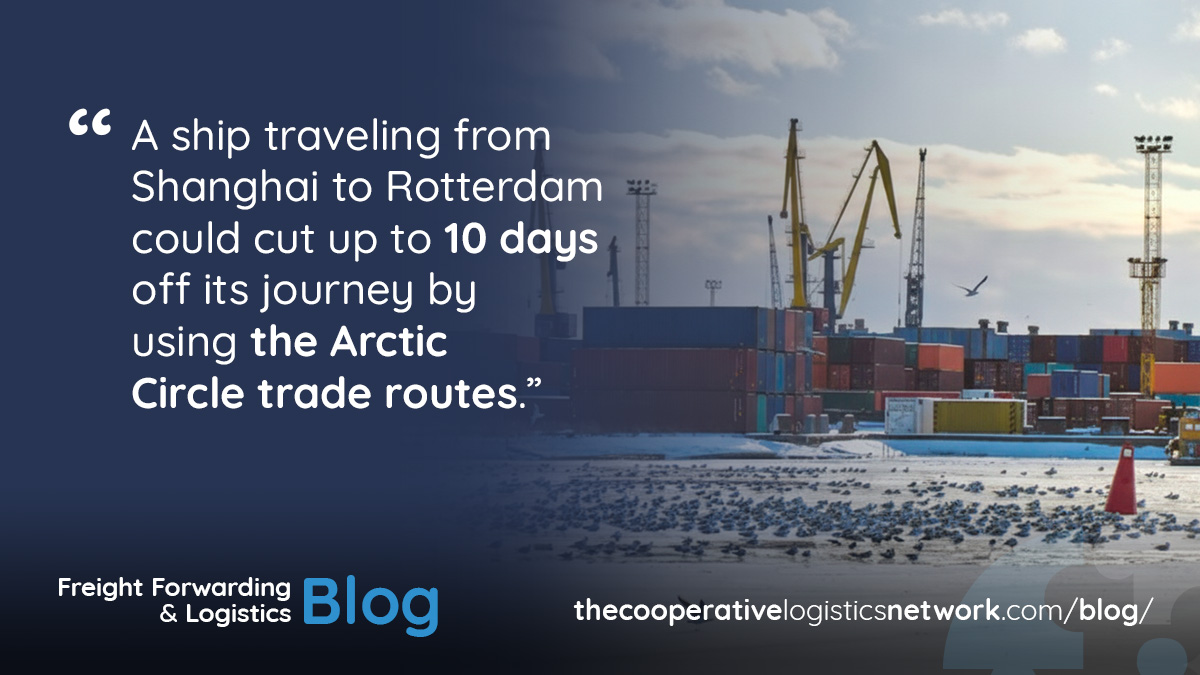
For logistics professionals, the benefits of the Northern Corridors could be transformative. Shorter sailing times mean lower fuel costs, faster delivery windows, and reduced emissions. A ship traveling from Shanghai to Rotterdam, for instance, could cut up to 10 days off its journey by using the Arctic Circle trade routes instead of the Suez Canal. As global trade patterns evolve, early adopters of logistics strategies that incorporate Arctic routes could gain a significant competitive edge. What’s more, companies that invest early in Arctic-ready operations will be well-positioned once these routes become mainstream.
The Future of Trans-Arctic Shipping
Here’s what it really comes down to: the future of trans-Arctic shipping will be decided by how quickly we can balance innovation, investment, and environmental stewardship. While the opportunities are enormous, they must be managed with caution. As climate change opens new trade routes, Canada finds itself at the center of a global experiment in sustainable logistics. If done right, the Northern Corridors initiative could transform Canada’s Arctic into a modern shipping hub, one that connects continents while respecting the fragile environment it operates within.
Turning Ice into Opportunity
The idea of commercial ships gliding past polar bears may sound surreal, but it’s quickly becoming part of Canada’s long-term economic reality. By embracing the potential of Arctic trade routes, Canada is proving that even the most challenging terrains can open doors to global opportunity. What this really means is that the Arctic, once seen as the end of the map, could soon become one of its most important crossroads. And for the logistics world, that’s an opportunity worth watching very closely.