
Cyber Monday 2025 did more than break sales records. It exposed a major shift in how forwarders think about space, timing, and profitability. The old model was simple: secure as much capacity as possible, fill it, and hope margins survive the peak turbulence. But this year proved that raw volume alone isn’t the key to winning peak season. The real differentiator was freight capacity management, the ability to predict demand, allocate space intelligently, and turn fluctuating loads into high-value revenue opportunities instead of operational chaos.
Cyber Monday has always been a pressure cooker for logistics teams. Orders spike overnight, trucks and aircraft fill rapidly, and panic becomes a default setting. But something changed in 2025. The forwarders who thrived weren’t the ones with the largest capacity pools. They were the ones who used smart capacity logistics and data to monetize every cubic meter, minute, and mile, even when the engines were running full throttle. Cyber Monday logistics revealed that space has value beyond physical volume, it’s a strategic asset when managed correctly.
What Cyber Monday exposed about capacity as a revenue engine
Cyber Monday demand forecasts began to shift weeks before the main sales day. Retailers launched promotions earlier, and order curves softened instead of exploding in one short window. That spread revealed pockets of unused space across lanes and schedules. Instead of letting it go to waste, smarter forwarders applied Freight capacity management tools to reorganize loads dynamically and price space differently based on urgency and availability.
This approach unlocked an entirely new layer of peak season revenue optimization. Instead of underutilized runs draining margin, unused capacity became a billable opportunity. Some operators created late booking tiers, premium last-minute departure options, guaranteed uplift pricing, and dynamic consolidation services. Retailers were willing to pay more when delivery mattered most. By shifting from a one-price-fits-all model to capacity monetization tied to real-time data, these companies built revenue streams that didn’t rely solely on shipment volume. That’s the core lesson of Cyber Monday 2025: space isn’t just something you fill. It’s something you sell strategically.
How Freight Capacity Management created monetizable flexibility
Forward-thinking operators treated Cyber Monday like a live simulation for real-world optimization. They used demand patterns, lane velocity, and SKU density analytics to reposition equipment, prioritize profitable routes, and time departures instead of adhering to static schedules. Every move was deliberate. This is where smart capacity logistics becomes powerful. It lets forwarders segment customers, differentiate service levels, and create scalable pricing structures based on actual behavior instead of fixed contracts. For example, offering instant access to urgent capacity at premium fees during peak congestion became one of the fastest-growing revenue opportunities.
Retailers viewed it as insurance against delayed delivery and stockout losses. Forwarders viewed it as a fair exchange for operational protection. And it worked because transparency replaced guesswork. Cyber Monday capacity optimization also encouraged new forms of consolidation. Instead of waiting for full loads, some operators built rolling consolidation models triggered by order velocity thresholds. That reduced idle time and increased margin efficiency. It proved that freight capacity strategies during peak season are all about controlling timing.
Freight Capacity Management and the demand for predictability
Cyber Monday also exposed another reality: customers are no longer paying for transport alone. They’re paying for planning. Data-driven capacity pricing became a turning point. Pricing tied to booking windows, cancellation rules, historical surge trends, and load density analytics turned cost models into something intelligent and responsive. Retailers don’t want surprises. They’re ready to pay premium fees for reliability and visibility, especially when performance impacts their customer reputation. Turning excess capacity into revenue isn’t a gamble. It’s an expectation. Strategic capacity management for forwarders turns stress conditions into a competitive advantage.
Freight capacity management is becoming a foundational capability rather than a seasonal tactic. Forwarders are already packaging tools like predictive lane availability, guaranteed space subscriptions, peak allocation tiers, and performance-based pricing into year-round offerings. It’s no longer about Cyber Monday alone; it’s about using Cyber Monday as the blueprint for normal operations.
Smart monetization beyond peak season
The most important shift is in mindset. Peak season used to be about surviving. Now it’s about learning. Cyber Monday logistics teaches forwarders how to monetize unused freight capacity even during quieter months. There are always fluctuations, festivals in Asia, school cycles in Europe, tourism surges, regional promotion waves, and manufacturing rebounds. The forwarders who analyze demand patterns and scale dynamically can turn volatility into predictable revenue. They’re no longer reacting to pressure; they’re engineering profit structures within it.
Capacity is the new currency
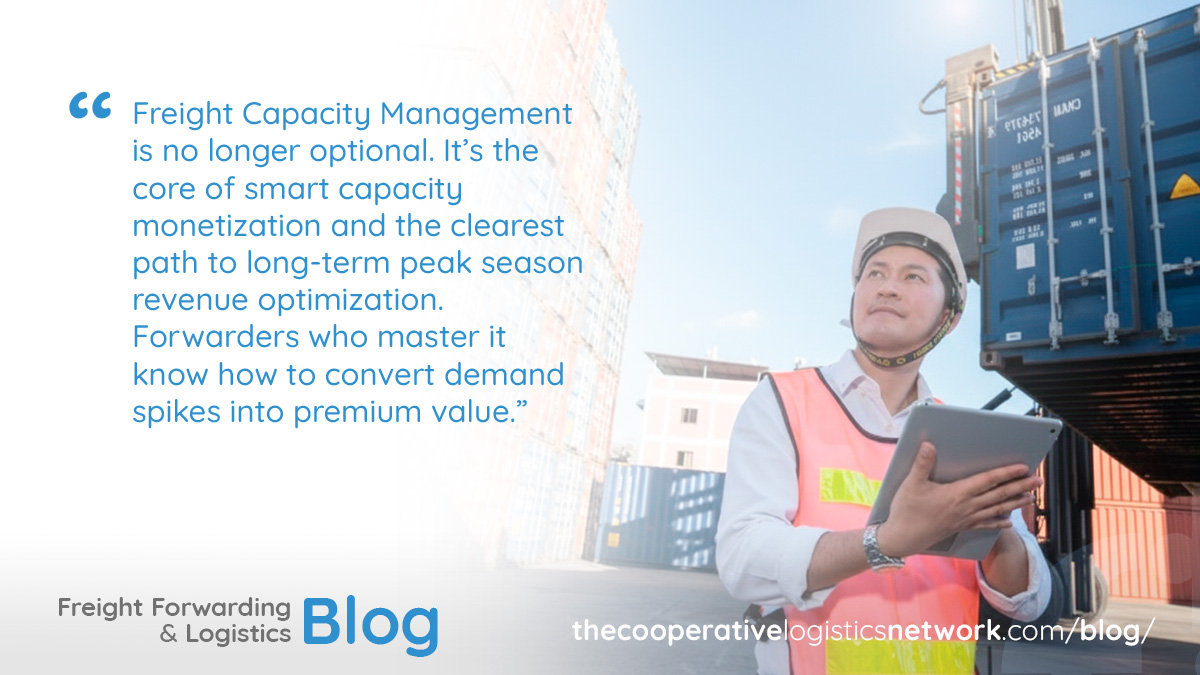
Here’s what Cyber Monday 2025 made clear: capacity isn’t just physical space. It is time, information, flexibility, and speed. When forwarders treat capacity as a monetizable asset rather than a cost to be minimized, they elevate themselves beyond commodity pricing. Freight capacity management is no longer optional. It’s the core of smart capacity monetization and the clearest path to long-term peak season revenue optimization. The forwarders who master it know how to convert demand spikes into premium value. Cyber Monday was the test. Now comes the real opportunity: turning temporary lessons into permanent financial advantage.